Showing posts with label New Zealand. Show all posts

27 April 2015

Auckland: a celebration in clouds

Who doesn’t like to moan about the weather? Yet, despite my initial grumblings about arriving back in Auckland to gale-force winds and driving heavy rain, its weather is one of the things I love about this maritime city.

Yesterday's weather
Perched as it is on the narrowest isthmus of the North Island – so narrow, in fact, that you can walk the 16 kilometres from coast to coast in just a few hours – Auckland enjoys a multitudinous palette of weather. Indeed, there’s a standing joke that in Auckland you can experience all four seasons in just one day. Both a rainproof jacket and sunscreen are essential at all times of the year!


Fierce tropical storms blow down from the mighty Pacific Ocean, bringing hurricane-strength winds and torrential downpours, and ice-chilled Antarctic gales blow up from the Roaring Forties, their fury funnelling north through the always wild Tasman Strait. Yet, despite being exposed to these climate extremes, Auckland’s climate is, for the most part, mild but also, invariably, damp – humid in the summer, and with frequent rain in all seasons.

The good thing about all that rain is the clouds that carry it. The clouds that light up in magnificent shades of pink, purple, orange and red at the breaking of the day and as the sun sets. The clouds that look like enormous clumps of cotton wool and can be imagined as faces or characters or scenes. The clouds that grow dark and angry and threatening then bring us the magic of lightning. And don’t even get me started on rainbows. How impoverished our lives would be without the glory of rainbows.


To show you the infinite diversity of Auckland’s weather, I have photographed the same scene – one of the views from my inner-city apartment, looking towards the extinct volcanic cone of Mt Eden – at different times of the day and the year. Inspired by yesterday's clouds, here then is my celebration of Auckland’s weather.


01 January 2015

2014: the year that was

As 2014 drew to a close, I couldn’t help but look back at my year through the lens of my camera to see the memories I’d captured. It was my ‘gap year’, a year of travel and exploration and adventure, a year when I made so many amazing memories and visited some truly incredible places, and a year of renewing old friendships and discovering many wonderful new friends. Here is just a small selection of my magical moments from 2014.

24 March Westhaven and harbour bridge, Auckland, New Zealand
The Waitemata harbour this morning was as flat as a millpond, not a wave, not even a ripple to be seen, unless it was caused by man and his transportation. It was the perfect morning for a long walk around the harbour’s edge … so that’s what I did.

28 May Hauraki Gulf from Mt Victoria, Auckland, New Zealand
It was a magnificent winter’s day today so I took a ferry ride across the harbour to Devonport and walked up one of the two volcanic cones there, Mt Victoria. From the top I took this shot of the other cone, North Head, and looking down towards the islands of the magnificent Hauraki Gulf.

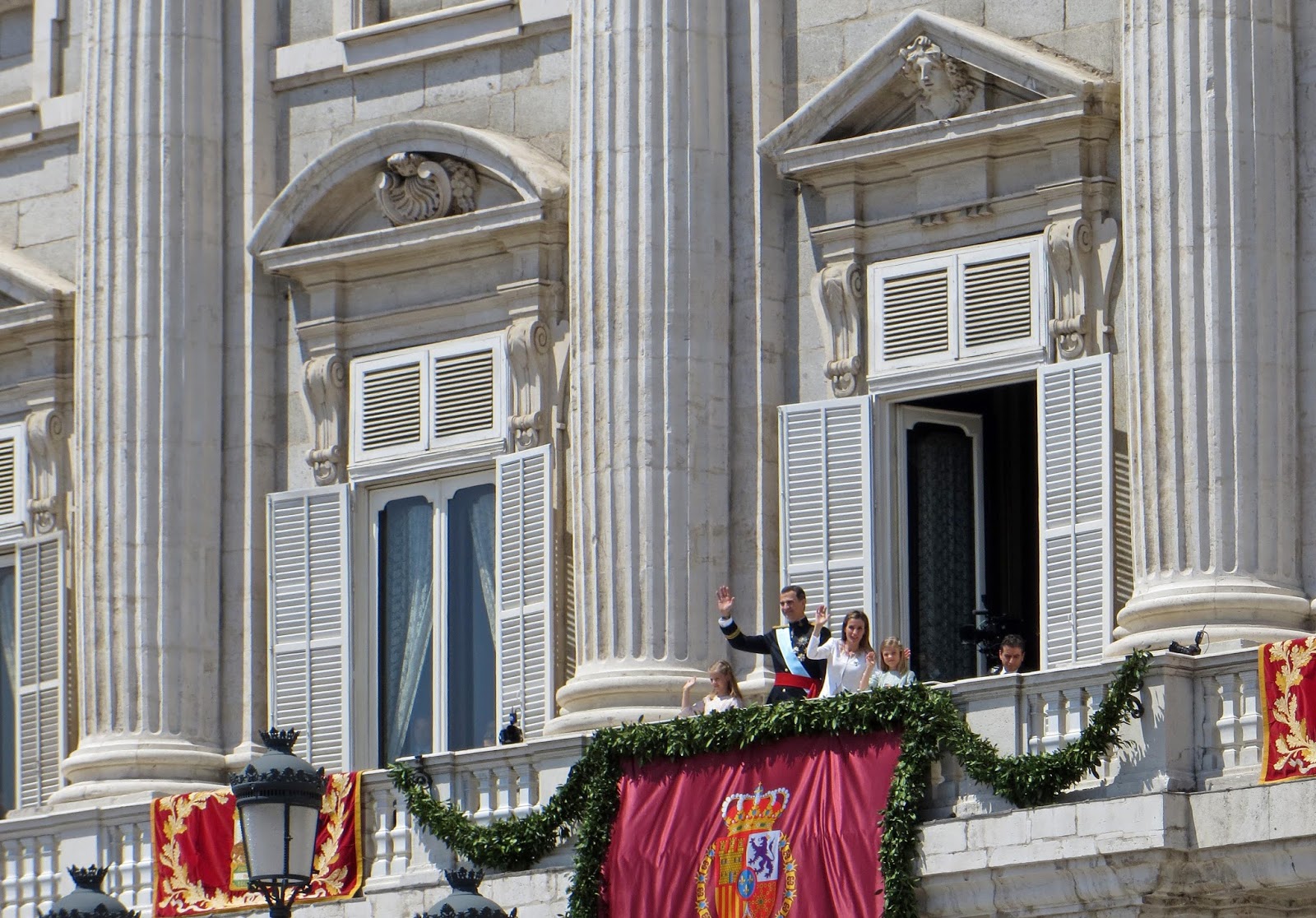
19 June Coronation of King Felipe in Madrid, Spain
By sheer coincidence, I witnessed a moment in Spanish history today as Felipe succeeded his father Juan Carlos as king. I joined the large crowds at the Royal Palace, waiting under the hot Spanish sun for their visit sight of their new leader. It was actually quite moving to be amongst so many patriotic, flag-waving and cheering Spaniards. Viva Felipe!


27 June Camel safari into the Sahara, Morocco
Bob Marley was my camel, and a placid, laid-back beast he was too, luckily, as this was my first-ever camel ride. We rode for an hour into the Western Sahara desert for our overnight camp under the stars. I can’t say I’ll be racing to ride another camel – some of my unmentionable parts are hurting – but it was an incredible once-in-a-lifetime experience.

17 July Little Moreton Hall, In England’s Cheshire
Built in stages between 1504 and 1610, Little Moreton Hall is an amazing moated half-timbered manor house. The Moretons, wealthy landowners, built the house as a symbol of their prosperity – and it certainly is impressive. What I loved most though was how wonky everything was – though now strengthened with an invisible steel support structure, the Long Gallery that runs along the top front range of the building is particularly uneven. The whole place seems to have been lifted straight out of a fairy tale!

8 August Exploring Devon’s Dartmoor
An 8 mile walk today, back to the glorious rolling green hills of Dartmoor, but this time to an ancient part of the moor, Ugborough, where there are Bronze Age hut circles dating from 2000BC, a 2-kilometre-long row of stone boundary markers dating from c.1700 BC, a Neolithic barrow, and several prehistoric stone burial mounds. The Dartmoor ponies and sheep, the magnificent view from the top of Western Beacon, and the good company were an added bonus!

12 August Beachy Head lighthouse, East Susse
I took so many photos today that it’s been exceedingly difficult to pick just one to share – others will follow when I finally get to blogging about this. I’ve settled on this image of the lighthouse (constructed in 1902) below the chalk cliffs at Beachy Head because the small size of the people walking along the hills on this part of the South Downs Way gives a good idea of the grandeur and enormity of the landscape and, hopefully, also an idea of the danger presented by coastal erosion. You wouldn’t want to get too close to those cliff edges!


24 August Hanging out with Masaai warriors in Tanzania
After visiting their school and meeting the village chief yesterday afternoon, today we spent a full day with the Masaai and stayed the night in a boma in the their village. A goat was slaughtered and eaten, the men and women danced for us, we watched the goats coming home from their daily grazing and the cattle going out again the next day. The Masaai are very special people and we were privileged to be welcomed into their homes.


24 September Auckland’s museum in the springtime
As I walked up the grass in front of Auckland Museum today, I found this glorious sight in front of me. These are Cape daisies (Arctotheca calendula) and are considered a weed by most people as they ‘spoil’ the look of a lawn. Personally, I think they’re wonderfully bright and cheerful, and they’re certainly putting on a lovely show at the museum right now.

29 October Super trees in Singapore
By jings, it’s hot here in Singapore – almost too hot for strolling around the magnificent Gardens by the Bay but it had to be done. With the incredible artificial Super Trees and the two conservatories, Flower Dome and Cloud Forest, as well as all the lovely outdoor gardens and sculptures, it is a botanical paradise. My favourite was the Cloud Forest, especially the breathtakingly high walkways – not for the vertigo-challenged!

8 December A country lane in Pickmere, Cheshire
We had a high of just 4 degrees again today and the odd spot of hail but I needed some photos to finish off my latest blog so braved the cold for a 4-mile walk. It was exhilarating and I do find the country lanes here in Cheshire very lovely … when it isn’t hailing!

13 December Deer at Tatton Park in Cheshire
We had a hard frost overnight so I was out walking again today, this time at Tatton Park Estate at nearby Knutsford. It was really chilly but when you’re well rugged up it’s such a delight to be out in the fresh air. It was perfect for frost photos, and the estate has some beautiful old trees and large expanses of water. They also farm fallow and red deer so walkers share the rolling fields with these beasties and you can get relatively close to them. Magnificent creatures!

27 October 2014

Auckland, my Auckland

Thanks to the weather Gods holding off the heavy rain that was forecast for today, a holiday Monday here in New Zealand, I had a lovely long morning walk around some of my favourite haunts, etching them into my memory, saying goodbye … for now.

Tomorrow I fly away again – to Singapore to visit my cousin for a couple of nights, and then on to England, for an indefinite period. I enjoyed my five weeks in the UK earlier this year so much that I’ve decided to go back for more – more impressive stately homes, more cool castles, more long walks along the seemingly interminable footpaths, more cute squirrels … and hopefully some work to keep the wolves from the door!

During the eight weeks I’ve been back in Auckland this time, I’ve seen winter fade, the temperatures warm and spring blossoms burst out in all their gorgeous glory. I’ve caught up with my wonderful friends, enjoyed lots of long conversations over glasses of wine and delicious dinners, and seen many entertaining movies. I’ve loved being back in my wee apartment, with familiar things around me, snuggling up in my comfy bed, enjoying my amazing view over Auckland’s sparkling harbour.

I’ve particularly enjoyed walking my old familiar trails, up many of Auckland’s volcanic cones, around the harbourside and inner-city beaches, and circuiting the marinas full of million-dollar boats, strolling along bush tracks under leafy trees, communing with sheep and cows and purring cats, being serenaded by our melodious native birds and laughing at the antics of seagulls and swallows.

Auckland, you are one of the most beautiful cities in the world and I will miss you. Here are some of the reasons why …


08 June 2014

Birds of New Zealand: part 3

As my pleasure in bird watching has continued to grow over recent months so my library of photos has also increased, meaning it’s time to post another blog about some of our wonderful New Zealand birds (my two previous blogs on the subject are here and here). I say, ‘New Zealand’ birds but, in fact, a couple of those listed here are immigrants who have perhaps been blown to these shores on the winds of a particularly violent storm or hitched a ride on a ship and, finding the environment to their liking, decided to make New Zealand home … and who can blame them?

New Zealand scaup (Aythya novaeseelandiae)
The New Zealand scaup (aka Black teal) is a little cutie and quite the entertainer. When feeding for the little fishes, snails, mussels, insects and aquatic plants that make up its varied diet, it dives underwater, staying down for between 20 to 30 seconds and reaching depths of up to 3 metres.

Though its plumage isn’t striking, being mostly dark brown or black, its squat form and upward pointing tail give it a perky appearance. In the breeding season, the male likes to advertise his presence by changing his head plumage to iridescent green.

European settlement in New Zealand reduced the numbers of these natives for a while but they have recovered naturally in some areas and been reintroduced in others (North Auckland, Taranaki and the Wellington district). For Aucklanders, there are quite a number of scaup making their home at Western Springs. And a word to the untutored like me – I have just realised today that I have been pronouncing its name wrongly – apparently, it should sound like ‘scorp’ not ‘scowp’.


Spur-winged plover (Vanellus miles)

Here’s another bird whose name can confound the tongue as opinions differ on the pronunciation of plover. Some say plover as in ‘lover’, others says plover as in ‘over’. I’ll leave you to decide which you prefer!

The spur-winged plover is a self-introduced Aussie (in Australia, it’s known as the masked lapwing). It was first discovered at the bottom of the South Island in 1932 and is now widespread throughout the country. 

It’s a large stocky wading bird but can be found almost anywhere there is low vegetation. I’ve seen quite a few along parts of the Auckland coastline but I’ve also sighted several pairs on the grassy slopes of Auckland Domain.


Pied stilt 
(Himantopus himantopus leucocephalus)

This is another self-introduced Aussie which, since its arrival in the early 19th century, has interbred with our endemic black stilt to produce a bird distinct from its Australian cousins. I particularly like its elegant long pink legs – hence the ‘stilt’ name, and those legs are also the reason for its Maori name, poaka, from ‘po’ meaning small and ‘aka’ meaning long, thin roots. As those long legs suggest, this is a wading bird, most often found on wetlands and in coastal areas throughout New Zealand.

The pied stilt is a very social creature, so is almost always seen in large noisy flocks, often feeding near other wading birds like oystercatchers and godwits. As that beak indicates, they often probe for worms, aquatic insects and larvae but, when the light is good, they also catch their food by sight.

Sacred kingfisher (Todiramphus sanctus)

The aptly named ‘king of the fishers’ is another highly entertaining bird to watch, especially when fishing. It will sit patiently on a strategically placed branch, pole or railing overlooking a mudflat or estuary then, with a sudden flash of turquoise, it’ll be off to snatch, catch or grab whatever has caught its sharp eye.

With its loud ‘kek kek kek’ call, the kingfisher will be sure to announce its presence, especially if you stray within its territory during the mating season, when it will also dive-bomb other birds and even humans if it considers them a threat. Its burrows can often be seen up high in muddy cliffs and banks at the coast but it also nests in holes in trees. Luckily for us, the population is numerous and widespread so we can all enjoy its antics.

Caspian tern (Hydroprogne caspia)

I spotted the two birds in my photographs in Auckland’s Hobson Bay on 26 May – a very exciting first sighting for me – then didn’t see them again on further visits until 7 June. The Caspian tern is the largest tern found in New Zealand, about the size of the black-backed kelp gull but with quite different colouring. With an estimated 1300-1400 breeding pairs in New Zealand, sightings are relatively uncommon, hence my excitement.

I think these two are mother and fledgling, as the younger bird was continually begging for food, both through its supplicating posture and its constant begging calls. The very patient parent would tolerate this behaviour for about 5 minutes, then give up and fly off to fish for food, hovering over the shallow waters until she saw her target then diving rapidly down to swoop it up. They were an absolute delight to watch.

Eurasian (or Australian) coot 
(Fulica atra)

For me, the most fascinating thing about this Australian immigrant (first recorded breeding in New Zealand in 1958) is its bizarre lobed feet, a cross between the long toes of wading birds and the webbed feet of swimming birds like ducks. If you can’t see its feet, you will also be able to recognise it instantly by the white shield above its bill.

These coots have made themselves at home in those parts of New Zealand that have their preferred reed-edged freshwater lakes and ponds – the birds I’ve seen have been in Hamilton’s Lake Rotorua and at Auckland’s Western Springs, where they compete with ducks, swans, geese and gulls for the bread thrown by humans.

And that’s it for New Zealand birds: part 3 – there will undoubtedly be a part 4 in the future. I hope this post will encourage you to turn off your computer and head outside to check out your local birdlife. I guarantee you will be amused by their antics, delighted by their colours, and entertained by their merry tunes. Just remember the wise words of Robert Lynd, ‘In order to see birds it is necessary to become a part of the silence.’


Much of the information about these birds came from my much-thumbed copy of Birds of New Zealand: A Photographic Guide, with a little additional help from co-author and master bird photographer Brent Stephenson.

08 May 2014

Auckland walks: Maungarei – Mt Wellington

The 10:10 to Papakura was running late due to “earlier customer issues” – whatever that might mean – so we didn’t depart Auckland’s Britomart train station until 10:20. Not that I cared at all. I hadn’t been on a train journey for a while and, though this was to be a fairly short trip, I was still looking forward to it and happy to sit and people-watch away the extra waiting time.

There are just three stations between Britomart, in central Auckland, and my destination, Panmure – Orakei, Meadowbank and Glen Innes – so, once we got underway, the trip only took 15 minutes. The Panmure train station and transport centre has recently been upgraded so it’s now all shiny glass, escalators and, if you have a transport card, a quick tag off before you exit to the constantly busy Ellerslie-Panmure Highway.

I quickly headed away from its noise and fumes, found the appropriately named Mountain Road and was off on my adventure to explore one more extinct volcano, which, at around 10,000 years old, is the second-youngest of Auckland’s 53 volcanoes.

The view of Mt Wellington from my apartment

This is the cone the European settlers named Mt Wellington, after the Duke of Wellington, but the indigenous Maori people call it Maungarei (which translates as ‘the watchful mountain’ or ‘the mountain of Reipae’). Like most of our volcanoes, this one exhibits much archaeological evidence of its past use by Maori as a fortified village. Its sides were terraced for housing sites and there are numerous pits where food was stored.

Maungarei may be a relative youngster but it’s not small – according to the book Volcanoes of Auckland, from base to crest, Maungarei’s cone is 100 metres tall, making it the tallest of Auckland’s volcanoes and the trig, at the highest point on the crater rim, is 162 metres above sea level. Its size means it’s a prominent landmark, easily seen from much of the city, and it sits exactly in the centre of my view as I look out my central-city apartment window. Since I moved here last August, that big mountain has been enticing me to visit.

There are no walking tracks up the mountain, just a narrow single-track road that goes up one side and down the other. It’s quite a steep walk but the views get increasingly more impressive as you ascend, providing a good excuse to stop and catch your breath, and to take photographs. Unfortunately, the immediate surroundings are filled with the grey expanses of factory buildings and large stacks of containers but, if you overlook those, you get fine views of the Panmure Basin, the Tamaki River and the inner Hauraki Gulf.

At right, Panmure township and Panmure Basin, with the Tamaki River running from the right background to the left.

Looking across the Tamaki River towards Farm Cove and Half Moon Bay
About half way up the mountain, there’s a flat area where one of its three fire-fountaining craters was filled with a concrete water reservoir back in 1960. There is a car park, as well as some picnic tables and benches. From there, you can follow a scoria-covered track up and around the rim of the volcano. This scoria proved slippery in places so I stuck to the grass at its edges. There are also tracks through the grass, which you can follow to explore the old pits and terraces and to descend the 60 metres into the southern and western craters.


Foregound, the southern and western craters, with the concrete reservoir in the northern crater in the background

As there are hardly any trees on the upper parts of the mountain, the rim walk provides spectacular 360-degree views in all directions, to the city skyscrapers, Waitemata Harbour and its islands in the north and east, to the Bombay Hills in the south, and over the Manukau Harbour in the west. Next to the trig at the highest point, there's a rather ugly, short concrete column that is topped with an engraved metal plate which points out the various landmarks to be seen. There are a couple of park benches on the northern terraces but, unfortunately, no signage to inform visitors about their surroundings.


The skyscrapers of the central city can just be seen on the horizon at right.
Still, I delighted in the views, the fresh air and the exercise. And now when I look out my window at Maungarei, I know more exactly what I am looking at and can remember the pleasant couple of hours I spent exploring there.

Another view from my apartment. I love how the early morning clouds and mist are flowing over the mountain top.