Showing posts with label Auckland Museum. Show all posts

01 January 2015

2014: the year that was

As 2014 drew to a close, I couldn’t help but look back at my year through the lens of my camera to see the memories I’d captured. It was my ‘gap year’, a year of travel and exploration and adventure, a year when I made so many amazing memories and visited some truly incredible places, and a year of renewing old friendships and discovering many wonderful new friends. Here is just a small selection of my magical moments from 2014.

24 March Westhaven and harbour bridge, Auckland, New Zealand
The Waitemata harbour this morning was as flat as a millpond, not a wave, not even a ripple to be seen, unless it was caused by man and his transportation. It was the perfect morning for a long walk around the harbour’s edge … so that’s what I did.

28 May Hauraki Gulf from Mt Victoria, Auckland, New Zealand
It was a magnificent winter’s day today so I took a ferry ride across the harbour to Devonport and walked up one of the two volcanic cones there, Mt Victoria. From the top I took this shot of the other cone, North Head, and looking down towards the islands of the magnificent Hauraki Gulf.

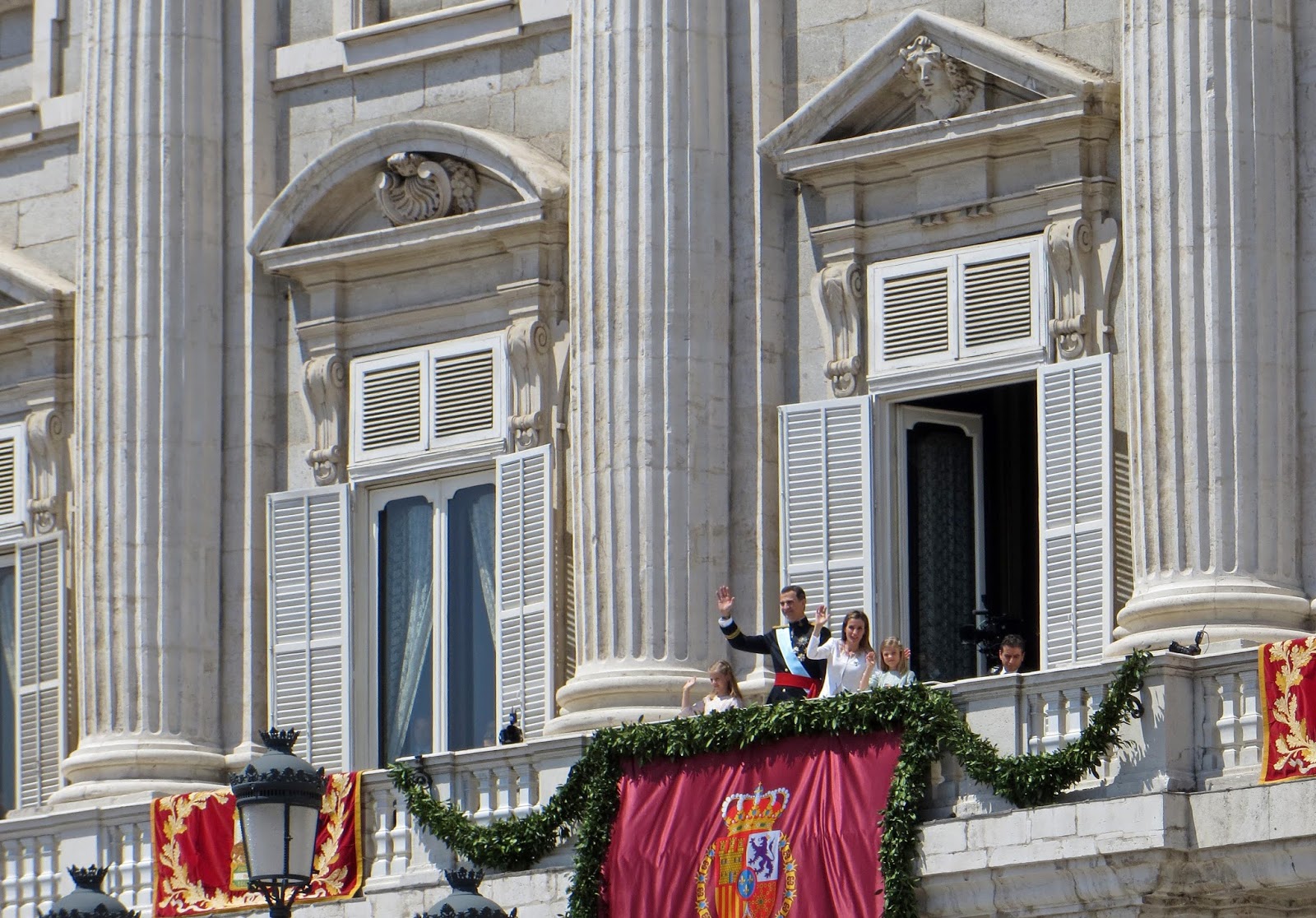
19 June Coronation of King Felipe in Madrid, Spain
By sheer coincidence, I witnessed a moment in Spanish history today as Felipe succeeded his father Juan Carlos as king. I joined the large crowds at the Royal Palace, waiting under the hot Spanish sun for their visit sight of their new leader. It was actually quite moving to be amongst so many patriotic, flag-waving and cheering Spaniards. Viva Felipe!


27 June Camel safari into the Sahara, Morocco
Bob Marley was my camel, and a placid, laid-back beast he was too, luckily, as this was my first-ever camel ride. We rode for an hour into the Western Sahara desert for our overnight camp under the stars. I can’t say I’ll be racing to ride another camel – some of my unmentionable parts are hurting – but it was an incredible once-in-a-lifetime experience.

17 July Little Moreton Hall, In England’s Cheshire
Built in stages between 1504 and 1610, Little Moreton Hall is an amazing moated half-timbered manor house. The Moretons, wealthy landowners, built the house as a symbol of their prosperity – and it certainly is impressive. What I loved most though was how wonky everything was – though now strengthened with an invisible steel support structure, the Long Gallery that runs along the top front range of the building is particularly uneven. The whole place seems to have been lifted straight out of a fairy tale!

8 August Exploring Devon’s Dartmoor
An 8 mile walk today, back to the glorious rolling green hills of Dartmoor, but this time to an ancient part of the moor, Ugborough, where there are Bronze Age hut circles dating from 2000BC, a 2-kilometre-long row of stone boundary markers dating from c.1700 BC, a Neolithic barrow, and several prehistoric stone burial mounds. The Dartmoor ponies and sheep, the magnificent view from the top of Western Beacon, and the good company were an added bonus!

12 August Beachy Head lighthouse, East Susse
I took so many photos today that it’s been exceedingly difficult to pick just one to share – others will follow when I finally get to blogging about this. I’ve settled on this image of the lighthouse (constructed in 1902) below the chalk cliffs at Beachy Head because the small size of the people walking along the hills on this part of the South Downs Way gives a good idea of the grandeur and enormity of the landscape and, hopefully, also an idea of the danger presented by coastal erosion. You wouldn’t want to get too close to those cliff edges!


24 August Hanging out with Masaai warriors in Tanzania
After visiting their school and meeting the village chief yesterday afternoon, today we spent a full day with the Masaai and stayed the night in a boma in the their village. A goat was slaughtered and eaten, the men and women danced for us, we watched the goats coming home from their daily grazing and the cattle going out again the next day. The Masaai are very special people and we were privileged to be welcomed into their homes.


24 September Auckland’s museum in the springtime
As I walked up the grass in front of Auckland Museum today, I found this glorious sight in front of me. These are Cape daisies (Arctotheca calendula) and are considered a weed by most people as they ‘spoil’ the look of a lawn. Personally, I think they’re wonderfully bright and cheerful, and they’re certainly putting on a lovely show at the museum right now.

29 October Super trees in Singapore
By jings, it’s hot here in Singapore – almost too hot for strolling around the magnificent Gardens by the Bay but it had to be done. With the incredible artificial Super Trees and the two conservatories, Flower Dome and Cloud Forest, as well as all the lovely outdoor gardens and sculptures, it is a botanical paradise. My favourite was the Cloud Forest, especially the breathtakingly high walkways – not for the vertigo-challenged!

8 December A country lane in Pickmere, Cheshire
We had a high of just 4 degrees again today and the odd spot of hail but I needed some photos to finish off my latest blog so braved the cold for a 4-mile walk. It was exhilarating and I do find the country lanes here in Cheshire very lovely … when it isn’t hailing!

13 December Deer at Tatton Park in Cheshire
We had a hard frost overnight so I was out walking again today, this time at Tatton Park Estate at nearby Knutsford. It was really chilly but when you’re well rugged up it’s such a delight to be out in the fresh air. It was perfect for frost photos, and the estate has some beautiful old trees and large expanses of water. They also farm fallow and red deer so walkers share the rolling fields with these beasties and you can get relatively close to them. Magnificent creatures!

25 April 2014

Anzac Day 2014

For those who live outside New Zealand and Australia, 25 April is Anzac Day, the day we remember and honour all those who have served in our armed forces, in particular those brave men and women who lost their lives in the service of their country. 

I have memories of cold, often rainy days from my childhood and teenage years, when I joined my parents to watch the Dawn Service, and, when I was a Girl Guide, we joined the march with soldiers, old and young, to the local cenotaph to join in the commemorations. At both primary and high schools, we always had a memorial service and I remember, as head prefect, having to recite to a full assembly those poignant words from the Ode of Remembrance:

They shall grow not old, as we that are left grow old:
Age shall not weary them, nor the years condemn.
At the going down of the sun and in the morning,
We will remember them.

In 2008, I was privileged to attend the Anzac Day commemorations at Gallipoli, in Turkey – you can read more about that in an earlier blog. 

This year, for the first time, I attended the Anzac Day service at Auckland War Memorial Museum in Auckland Domain. As expected, it was a very moving event but what struck me in particular was the setting, in front of what must surely be New Zealand's biggest war memorial.


This War Memorial Museum, opened in November 1929, is a living, functioning memorial to all the men and women from the greater Auckland region who have lost their lives in a military conflict. According to an article in the New Zealand Herald of 11 October 1920, the building’s purpose was to ‘preserve relics of the conflict … establish a permanent record of effort and achievement by the Dominion’s youth … treasure the memories of fallen soldiers, and … preserve for future generations the inspiration of the war’s heroism and self-sacrifice.’

The design of the Museum Cenotaph is a direct replica of the Cenotaph in Whitehall, in London.

A local firm of architects, Grierson, Aimer and Draffin, designed the Museum with a façade of Doric columns that resemble the Parthenon in Athens, and a small hillock was removed from in front of the building, so the Museum could be seen from the sea, just like the temples the returning servicemen had seen on the shores of the Mediterranean countries where they had been fighting.

Stained glass ceiling above main foyer, depicting the Coat of Arms of all British Dominions & Colonies during the First World War (Gibraltar, Kenya, South Africa, New Foundland, Canada, Great Britain, New Zealand, Australia, India, Ceylon, Malaya and the Straits Settlements, the Channel Islands, Fiji, Jamaica and Malta).


The First World War Sanctuary
The First World War Sanctuary and the Roll of Honour which lists the full name and service details of each serviceperson from the Auckland province who died as a result of that war. The pages are still turned daily.
In the early 1960s, the Museum was expanded, both to increase the Museum’s display, storage and work space and also to expand the war memorial to include those killed in the Second World War. In 1991, the Second World War Hall of memory was expanded once more, this time to include the Roll of Honour for servicemen and women killed in the Korea, Malaya-Borneo and Vietnam conflicts.

Stained glass windows at either end of the World War Two Hall of Memory commemorating the Battles of Britain and the River Plate, and honouring the airforce and navy respectively.

World War Two Hall of Memory

Second World War shrine in the Hall of Memory. The globe represents the worldwide theatre of the war. The  stained glass windows depict the insignia of various units, including the WAAFs, WAACs, and WRNZNs.
The second floor of the Museum is devoted to memorials of war. The Rolls of Honour for the First and Second World Wars are engraved in white Sicilian marble set into the walls, as well as being contained in handwritten leather-bound volumes. 

The ‘Scars on the Heart’ exhibition covers the New Zealand civil wars and the 19th-century Anglo-Boer War, as well as the First and Second World Wars, the conflicts in Asia and the New Zealand military’s involvement in more recent United Nations peacekeeping missions. There is also a military information centre, The Armoury, with copious resources for researchers of military history and for families wanting to trace their own ancestors’ military service.

One of the displays

The exterior of the building is also an integral part of the war memorial, conveying information about the battles in which New Zealanders fought and honouring those brave men and women who served their country in those bloody and difficult times.

Around the exterior of the building is a frieze. The First World War frieze depicts 44 battle scenes; the Second World War frieze depicts members of the armed services, including nurses.

Engraved above each window is the name of a battle or campaign in which New Zealanders fought.
Unlike modern wars, one third of the 18,166 New Zealanders who died in World War One have no known grave. The Auckland War Memorial Museum serves as a place where a grateful society can honour their sacrifice, and their friends and family can remember them. Lest we forget.


The water feature in front of the Cenotaph is engraved with the Ode of Remembrance.