Showing posts with label Devon. Show all posts

01 January 2015

2014: the year that was

As 2014 drew to a close, I couldn’t help but look back at my year through the lens of my camera to see the memories I’d captured. It was my ‘gap year’, a year of travel and exploration and adventure, a year when I made so many amazing memories and visited some truly incredible places, and a year of renewing old friendships and discovering many wonderful new friends. Here is just a small selection of my magical moments from 2014.

24 March Westhaven and harbour bridge, Auckland, New Zealand
The Waitemata harbour this morning was as flat as a millpond, not a wave, not even a ripple to be seen, unless it was caused by man and his transportation. It was the perfect morning for a long walk around the harbour’s edge … so that’s what I did.

28 May Hauraki Gulf from Mt Victoria, Auckland, New Zealand
It was a magnificent winter’s day today so I took a ferry ride across the harbour to Devonport and walked up one of the two volcanic cones there, Mt Victoria. From the top I took this shot of the other cone, North Head, and looking down towards the islands of the magnificent Hauraki Gulf.

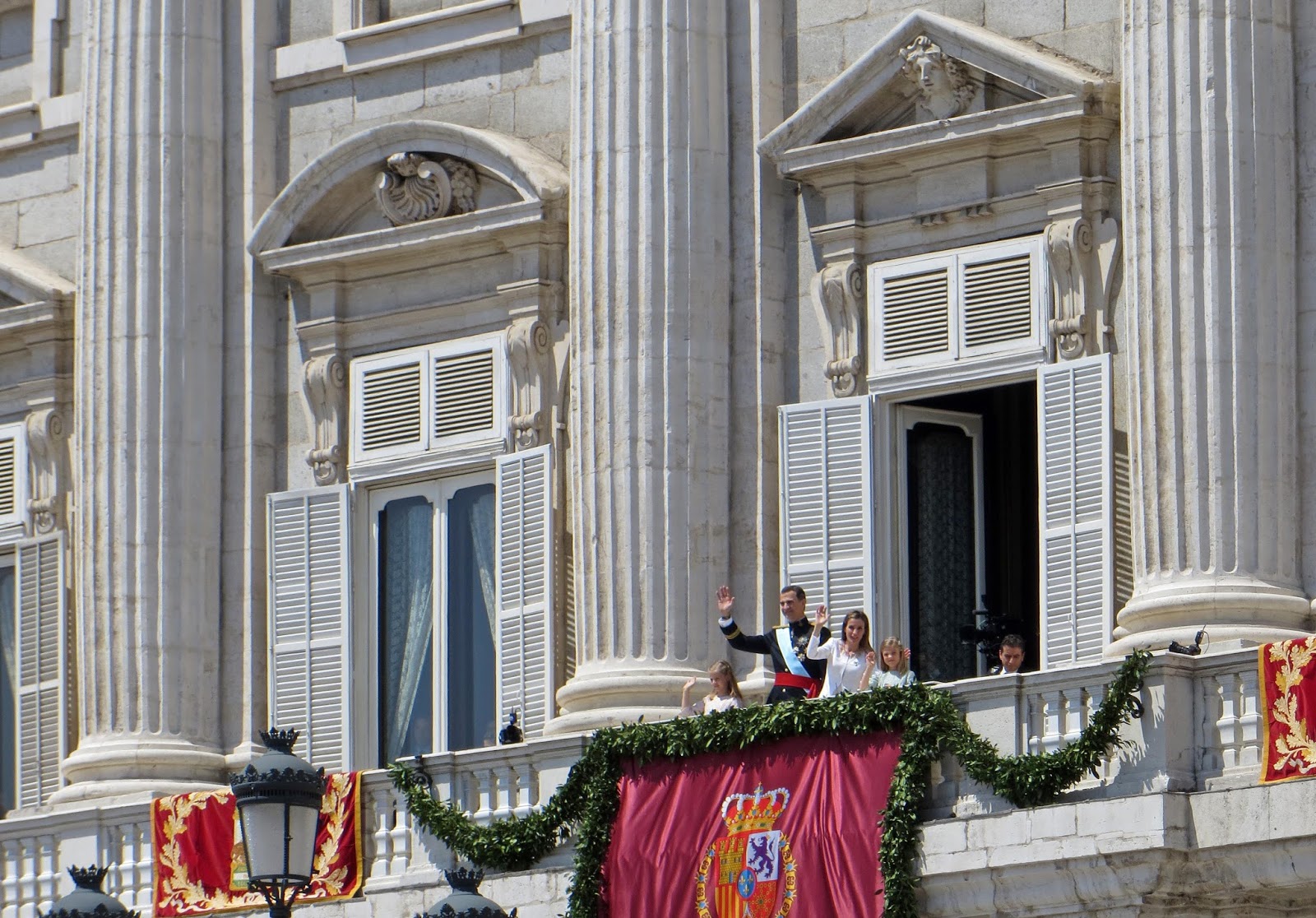
19 June Coronation of King Felipe in Madrid, Spain
By sheer coincidence, I witnessed a moment in Spanish history today as Felipe succeeded his father Juan Carlos as king. I joined the large crowds at the Royal Palace, waiting under the hot Spanish sun for their visit sight of their new leader. It was actually quite moving to be amongst so many patriotic, flag-waving and cheering Spaniards. Viva Felipe!


27 June Camel safari into the Sahara, Morocco
Bob Marley was my camel, and a placid, laid-back beast he was too, luckily, as this was my first-ever camel ride. We rode for an hour into the Western Sahara desert for our overnight camp under the stars. I can’t say I’ll be racing to ride another camel – some of my unmentionable parts are hurting – but it was an incredible once-in-a-lifetime experience.

17 July Little Moreton Hall, In England’s Cheshire
Built in stages between 1504 and 1610, Little Moreton Hall is an amazing moated half-timbered manor house. The Moretons, wealthy landowners, built the house as a symbol of their prosperity – and it certainly is impressive. What I loved most though was how wonky everything was – though now strengthened with an invisible steel support structure, the Long Gallery that runs along the top front range of the building is particularly uneven. The whole place seems to have been lifted straight out of a fairy tale!

8 August Exploring Devon’s Dartmoor
An 8 mile walk today, back to the glorious rolling green hills of Dartmoor, but this time to an ancient part of the moor, Ugborough, where there are Bronze Age hut circles dating from 2000BC, a 2-kilometre-long row of stone boundary markers dating from c.1700 BC, a Neolithic barrow, and several prehistoric stone burial mounds. The Dartmoor ponies and sheep, the magnificent view from the top of Western Beacon, and the good company were an added bonus!

12 August Beachy Head lighthouse, East Susse
I took so many photos today that it’s been exceedingly difficult to pick just one to share – others will follow when I finally get to blogging about this. I’ve settled on this image of the lighthouse (constructed in 1902) below the chalk cliffs at Beachy Head because the small size of the people walking along the hills on this part of the South Downs Way gives a good idea of the grandeur and enormity of the landscape and, hopefully, also an idea of the danger presented by coastal erosion. You wouldn’t want to get too close to those cliff edges!


24 August Hanging out with Masaai warriors in Tanzania
After visiting their school and meeting the village chief yesterday afternoon, today we spent a full day with the Masaai and stayed the night in a boma in the their village. A goat was slaughtered and eaten, the men and women danced for us, we watched the goats coming home from their daily grazing and the cattle going out again the next day. The Masaai are very special people and we were privileged to be welcomed into their homes.


24 September Auckland’s museum in the springtime
As I walked up the grass in front of Auckland Museum today, I found this glorious sight in front of me. These are Cape daisies (Arctotheca calendula) and are considered a weed by most people as they ‘spoil’ the look of a lawn. Personally, I think they’re wonderfully bright and cheerful, and they’re certainly putting on a lovely show at the museum right now.

29 October Super trees in Singapore
By jings, it’s hot here in Singapore – almost too hot for strolling around the magnificent Gardens by the Bay but it had to be done. With the incredible artificial Super Trees and the two conservatories, Flower Dome and Cloud Forest, as well as all the lovely outdoor gardens and sculptures, it is a botanical paradise. My favourite was the Cloud Forest, especially the breathtakingly high walkways – not for the vertigo-challenged!

8 December A country lane in Pickmere, Cheshire
We had a high of just 4 degrees again today and the odd spot of hail but I needed some photos to finish off my latest blog so braved the cold for a 4-mile walk. It was exhilarating and I do find the country lanes here in Cheshire very lovely … when it isn’t hailing!

13 December Deer at Tatton Park in Cheshire
We had a hard frost overnight so I was out walking again today, this time at Tatton Park Estate at nearby Knutsford. It was really chilly but when you’re well rugged up it’s such a delight to be out in the fresh air. It was perfect for frost photos, and the estate has some beautiful old trees and large expanses of water. They also farm fallow and red deer so walkers share the rolling fields with these beasties and you can get relatively close to them. Magnificent creatures!

12 October 2014

England: Strolling in the footsteps of ancient man on Dartmoor

An 8-mile walk today, back to the glorious rolling green hills of Dartmoor, but this time to an ancient part of the moor, Ugborough, where we walked in the footsteps of early man.

We started our adventure in Ivybridge, a small market town on the southern edge of Dartmoor. You can take in the riverside walks along the pretty River Erme and stand in the footsteps of JMW Turner, where he painted the old Ivy Bridge around 1814. There’s a paper mill dating from 1862, where paper is still manufactured today, an aqueduct and a tall railway viaduct, and various interesting old buildings but we didn’t spend any time exploring the town – the moors awaited!

We parked above Ivybridge, thus avoiding the steep climb up the streets to the start of the walk proper, a section of the 117-mile-long Two Moors Way that crosses Dartmoor and Exmoor. For those wanting to follow our path (though I’d definitely recommend a good map!), we left the car near the railway bridge in Harford Road, followed the road over the bridge for perhaps half a mile, then turned right at Stowford Farm onto a public bridle path, an old drovers’ road used by shepherds and their sheep since medieval times.


Passing under the leafy trees of the old road brought us over a stile, out onto the moorland and off we went. The moors are glorious – the rolling terrain is perfect for striding out; there are few people; the wide open spaces mean you can see for miles and you almost feel like you can reach up and touch the sky; and it’s relatively safe, except perhaps in misty weather, when I imagine you could easily lose your way.


Three tracks lead away from the stile – we took the left, past Addiscombe, the ruined cottage of a 19th century tin miner. We circled an old quarry, and followed stone walls and footpaths, some distinct, some more like sheep paths, none signposted, so it was a good thing we had two brochures with small maps and descriptions of the key features.


We skirted Butterbrook reservoir, discretely hidden from view by a dense triangular-shaped stand of trees, and here began our encounter with ancient man, as we wandered through the remains of the Harford Moor settlement, a group of Bronze Age hut circles dating from around 2000BC. They are of the double-walled type – perhaps a testament to the cold moorland weather – and it was fascinating to note that all the entrances faced south east.


By this time we were peckish so decided to eat our sandwiches where those ancient folk had lived, sharing the shade of the conifers surrounding the reservoir with a flock of sheep, until Indie the dog scared them and tried to chase them away – she was on her lead most of the day for precisely this reason. When they realised Indie was restrained, the sheep soon wandered back.


Refreshed, we strolled onwards and upwards, to a two-kilometre-long row of boundary stone markers, the Butterdon Stone Row, dating from c.1700BC when the moor was divided up like the spokes of a wheel into reaves, a land division system separating areas of arable, pasture and open common land for use by the moorland communities. The precise nature and organisation of the system has led archaeologists to speculate that the community was ruled by a single chieftain or king.

Following the stone row to its terminus at the top of Piles Hill, we arrived at a pair of taller standing stones. The largest, a menhir made of pink granite, is known as the ‘Longstone’ and would originally have been 4.5 metres long – an impressive monument.

We then headed slightly across country to connect with the old Redlake Tramway, also known as The Puffing Billy Track. Though the rails have since been removed, the tramway was used between 1910 and 1932 to transport clay and workers from the nearby pits at Redlake to Bittaford township, a distance of 8.3 miles. It now makes a convenient and easy-to-follow walking track.


A little way along the tramway, we made another slight detour, to Spurrell’s Cross. Only the top part of the stone cross is original – it marked the intersection of two of the Dartmoor pathways for drovers, shepherds and monks (walking from Buckfast Abbey to Plympton Priory). Amazingly, there are 132 such crosses on Dartmoor.


Back to the tramway for a short while but then we detoured again, to a nearby tor called Hangershell Rock. I looked but there were no letterboxes to be found. From there we continued along a grass path towards Weatherdon Hill and Butterdon Hill – names that made me think I was walking with hobbits in The Lord of the Rings – past a barrow and three Neolithic stone-filled cairns, common burial places in this ritual landscape. Here ponies were grazing – lots of grey mares, with very cute brown foals – and the 270-degree views of coast and countryside were simply stunning.

From the hill, it was all downhill to the end of the drovers’ road where we had started our walk, many hours earlier. We were hot and sweaty and a bit sunburnt, but what an incredible day we had spent, strolling through ancient human history.


11 October 2014

England: South West Coast Path, Devon

Blazing sun and striding out, sweaty skin and street performers … a sweet sweet day!

A six-mile walk might not sound like much but, when it’s up and down the spectacular coastal cliffs you can see in this photo, you might understand why I finished the day with slightly sore feet, especially as our destination, Sidmouth, had a music festival happening all that week so we also pounded the pavements there, checking out all the weird and wonderful sights of the street entertainers and their onlookers.

We parked the car and began our walk in Budleigh Salterton. It’s a pretty seaside town, sitting alongside a two-mile pebble beach, within the East Devon Area of Outstanding Natural Beauty, and it’s one of the access points to the 95-mile-long coastline that is the Jurassic Coast World Heritage Site – think fossils. 


If they weren’t reasons enough to visit, Budleigh Salterton also sits on the mouth of the River Otter, where the reed beds and marshy area around the river estuary have been designated a Site of Special Scientific Interest as they provide an excellent habitat for migratory birds – twitchers take note! And – the reason we were there – you can also access the 630-mile-long South West Coast Path from Budleigh Salterton.   

We picked up the coastal path by the river estuary, crossed via a small bridge, then set off across the fields towards the coast. The path runs along the clifftops, at times close to the edge. The cliffs were rich red sandstone initially and then, as we continued, the fabric changed to a beige-coloured soil full of pebbles and chips of flint. It’s a long way down and the cliffs are subject to erosion, so you do need to be a little wary of straying too close, particularly as it’s tempting to take photos over the edge.

The countryside rolled up and down hill like a rollercoaster, so the walk was at times quite challenging but never difficult, especially as we stopped often to photograph butterflies, wild flowers and the panoramic views. The fields were a natural patchwork, golden with ripe barley and green with lush grass, and the views up and down the coastline were spectacular. Not far off the coast we could see one of the colourful Stuart Line Cruise boats taking passengers on a tour along the Jurassic Coast.  


Sidmouth looked very distant at first but we gradually got closer, passing the very unexpected sight of Ladrum Bay, a holiday camp full of caravans and tiny identical holiday homes. The pebble beach below was packed with holidaymakers, with many people kayaking and row-boating. From Ladrum Bay, it was quite a strenuous hike to the top of the aptly named Peak Hill, at 512 feet the highest point on our walk, and from there it was all downhill to Sidmouth.


With the music festival in full swing, the town was packed with sightseers and holidaymakers, musicians and performers. It was buzzing! We enjoyed a shady umbrella, cold drinks and a spot of lunch at a roadside café, then wandered hither and yon, watching the many free outdoor performances on the prom and in the streets beyond. The entertainment was varied and fun: a didgeridoo player, the Weymouth Accordian Club, a man playing a harp, a woman singing operettas, a kid juggling, Morris dancers, a guy on a tall unicycle juggling fire sticks. And the weird and wonderful characters in the crowd were almost as much fun to watch as the performers.


Sidmouth is another charming seaside town, with many of its buildings and much of its architectural heritage dating from the Regency period. The locals are obviously and justifiably proud of their town, and streets and shops were bedecked with glorious displays of flowers – a visual fiesta.


From Sidmouth we caught the local bus back to Budleigh Salterton. It meandered to and fro through all the little hamlets between the two main towns so took quite a while but it was nice to sit and relax, the scenery was pretty and the hamlets interesting: we passed through Hayes Barton, where a statue pays tribute to its most famous son, Sir Walter Raleigh. Our bus driver was very skilful at manoeuvring the double-decker through the narrow lanes and streets.

From the bus stop at Budleigh Salterton we had just a short walk back to the car but we detoured along the beach where someone had very creatively used the different coloured stones to create pictures. Families were enjoying evening barbecues here and there, crayfish pots were stacked ready for the next day’s fishing, and the multi-coloured beach huts helped to create a very picturesque scene. It was the perfect end to a wonderful walk. Now, I want to complete the challenge of walking a much longer section of the South West Coast Path. 


10 October 2014

England: A day in Exeter

Steeped in history, with a stunning cathedral and the lure of river-side cafes, Devon’s county town of Exeter is well worth a visit.

Exeter Cathedral facade
We drove to the outskirts of city then opted to park ‘n’ ride as parking is expensive in the city centre – indeed, in most English city centres. The heavens opened as we hurried from car to bus stop and as my jacket was only shower-proof I got rather soggy, not an auspicious start to the day’s sightseeing. But I soon dried off, the sun came out and the weather continued good for the rest of the day.

First stop, Exeter Cathedral, where we mooched for the better part of an hour. Entry wasn’t cheap at six quid each, particularly considering they’d run out of free guidebooks, and the organ was being renovated and parts of the cathedral’s exterior were being restored, meaning photo opportunities were restricted by the cumbersome scaffolding inside and out, by areas of the cathedral being roped off and by the truck parked in the entrance. I was not particularly impressed at being charged full price in those conditions. But my moaning ends there, as it is an incredible structure, one of England’s most noteworthy cathedrals and as fine an example of Gothic architecture as you’ll see anywhere.


For me, the delight is in the details. First, the ceiling bosses – a long way up to be sure but worth craning your neck and zooming in with your camera to see the intricate designs, all finely carved and coloured with subjects including biblical stories, human figures, naturalistic and fabulous scenes.
And, if your neck’s arthritic or your lens doesn’t zoom, there’s a replica boss to admire. Rather than weighing two tons, like some of the largest on the ceiling, the replica is almost as light as a feather, made from papier maché over a wood and wire frame and then finished with acrylic paints. It’s an almost exact copy of the 700-year-old boss in the centre of the crossing between the transepts and its subject, three dragons and a knight, apparently represents the Christian soul trampling on the world, the flesh and the devil.

The cathedral contains more statues, memorials and effigies than I’ve ever seen in one religious building before and the variety is such that, when we visited, one corner of the building was devoted to an exhibition explaining the changing fashions in grave markers over the centuries. The photo above shows two of the more grand memorials. On the left lies Bishop Qinel, the 13th bishop of Exeter, who’s credited with initiating the construction of the cathedral we see today. He died in 1291. On the right, the fabulous woman with the skull, who died in 1614, was Lady Dorothy Dodderidge.  Her inscription translates as follows: ‘Here lies Dorothy the wife of John Doderidge, knight, one of the Justices of the Lord King assigned at the Pleas held before the King, and daughter of Amisus [Latinised form] Bampfield, knight, who died on the first of March in the Year of Our Lord 1614’.


I couldn’t help but feel I was constantly being watched as I strolled Exeter’s hallowed halls and it was nothing to do with a religious presence. There are human heads and faces everywhere, not only on the effigies and memorials but seemingly carved into every available surface, stone and wooden. And then there are the animals – elephants, eagles, crocodiles, you name it – the place is a veritable Noah’s Arc of creatures. 

Designed by George Gilbert Scott in the 1870s, the choir stalls, in particular, are alive with beasties. And don’t even get me started on the misericords – Exeter has the earliest set in England, dating from the mid-13th century, or the owls – one of the side chapels is full of these, in wood, stone and tapestry. I’ll leave you to discover why.


One thing I didn’t expect to see in the cathedral was the magnificent clock that hangs on the north wall. Gifted by Bishop Courtenay in 1484, at its centre is a globe representing the earth, around which revolves the moon, turning on its axis to show the phases. The motto, ‘Pereunt et imputantur’, at the bottom of the clock, is from the Latin poet Martial and can be translated ‘the hours pass and are reckoned to our account’ – or, in more modern parlance, ‘time passes, spend it wisely’. Good advice!

So far, I’ve focused here on the cathedral’s interior but the exterior is equally magnificent. The façade is particularly imposing. As regular readers will know, I am a huge fan of gargoyles so, for me, the gargoyles were a special highlight – those around the exterior of Exeter Cathedral are some of the finest I’ve ever seen. The oldest ones have deteriorated badly through time and are almost completely eroded away in places but there are newer ones that have some incredible expressions on their faces. The modern sculptor obviously had a keen sense of the bizarre and the fantastic.

A lovely square and old buildings surround the cathedral. We discovered a couple of wonderfully carved wooden doors, the black-and-white half-timbered buildings date from the 1500s and, in one corner, sits St Martin’s Church, dating from the Norman Conquest.

We lunched in the square at an outdoor café, enjoying the sunshine and people watching, before walking along a couple of streets to RAMM, the Royal Albert Memorial Museum – another splendid building, with a new construction butting on to its rear; an elegant foyer, with pink painted walls and a life-size statue of Prince Albert in pride of place halfway up the grand branching staircase; and interesting exhibitions about the local area, from Neolithic and Roman times (the town has about 70% of its Roman wall still extant) to the modern day (clay mining and pottery works, tin mining, etc).

To finish our day, we headed down to the quay via two of the oldest buildings in the city (one of which, below left, had been moved to make way for a modern road) and made a quick visit to nearby Cricklepitt Mill (the mill wasn’t working that day but two of its three wheels are used to generate electricity and it boasts a lovely wild garden which we explored).

The quay sits alongside the River Exe and the Exeter Ship Canal, where ships would have loaded and unloaded their cargoes in centuries past. The old warehouses are now being converted to apartments and shops, restaurants and cafes, like the one where we enjoyed drinks and cake. Kayakers, peddle-boaters and rowers were enjoying the waters, and one rather quirky feature was the hand-powered ferry that was doing a roaring trade carrying folks across the canal (30p for adults, 20p for kids). And these were just a few of Exeter’s attractions. I’m obviously going to visit again – and so should you!