Showing posts with label Dartmoor. Show all posts

01 January 2015

2014: the year that was

As 2014 drew to a close, I couldn’t help but look back at my year through the lens of my camera to see the memories I’d captured. It was my ‘gap year’, a year of travel and exploration and adventure, a year when I made so many amazing memories and visited some truly incredible places, and a year of renewing old friendships and discovering many wonderful new friends. Here is just a small selection of my magical moments from 2014.

24 March Westhaven and harbour bridge, Auckland, New Zealand
The Waitemata harbour this morning was as flat as a millpond, not a wave, not even a ripple to be seen, unless it was caused by man and his transportation. It was the perfect morning for a long walk around the harbour’s edge … so that’s what I did.

28 May Hauraki Gulf from Mt Victoria, Auckland, New Zealand
It was a magnificent winter’s day today so I took a ferry ride across the harbour to Devonport and walked up one of the two volcanic cones there, Mt Victoria. From the top I took this shot of the other cone, North Head, and looking down towards the islands of the magnificent Hauraki Gulf.

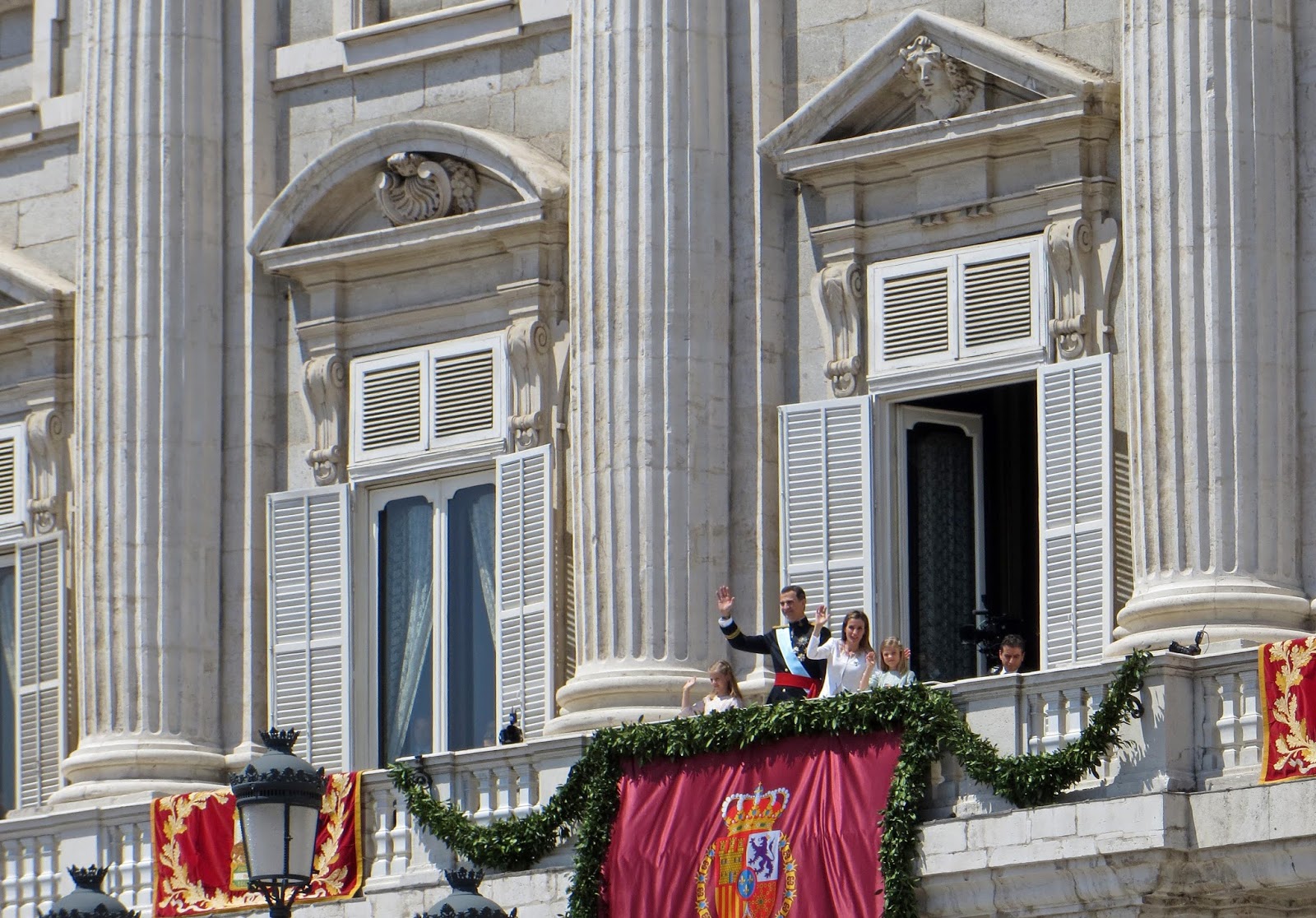
19 June Coronation of King Felipe in Madrid, Spain
By sheer coincidence, I witnessed a moment in Spanish history today as Felipe succeeded his father Juan Carlos as king. I joined the large crowds at the Royal Palace, waiting under the hot Spanish sun for their visit sight of their new leader. It was actually quite moving to be amongst so many patriotic, flag-waving and cheering Spaniards. Viva Felipe!


27 June Camel safari into the Sahara, Morocco
Bob Marley was my camel, and a placid, laid-back beast he was too, luckily, as this was my first-ever camel ride. We rode for an hour into the Western Sahara desert for our overnight camp under the stars. I can’t say I’ll be racing to ride another camel – some of my unmentionable parts are hurting – but it was an incredible once-in-a-lifetime experience.

17 July Little Moreton Hall, In England’s Cheshire
Built in stages between 1504 and 1610, Little Moreton Hall is an amazing moated half-timbered manor house. The Moretons, wealthy landowners, built the house as a symbol of their prosperity – and it certainly is impressive. What I loved most though was how wonky everything was – though now strengthened with an invisible steel support structure, the Long Gallery that runs along the top front range of the building is particularly uneven. The whole place seems to have been lifted straight out of a fairy tale!

8 August Exploring Devon’s Dartmoor
An 8 mile walk today, back to the glorious rolling green hills of Dartmoor, but this time to an ancient part of the moor, Ugborough, where there are Bronze Age hut circles dating from 2000BC, a 2-kilometre-long row of stone boundary markers dating from c.1700 BC, a Neolithic barrow, and several prehistoric stone burial mounds. The Dartmoor ponies and sheep, the magnificent view from the top of Western Beacon, and the good company were an added bonus!

12 August Beachy Head lighthouse, East Susse
I took so many photos today that it’s been exceedingly difficult to pick just one to share – others will follow when I finally get to blogging about this. I’ve settled on this image of the lighthouse (constructed in 1902) below the chalk cliffs at Beachy Head because the small size of the people walking along the hills on this part of the South Downs Way gives a good idea of the grandeur and enormity of the landscape and, hopefully, also an idea of the danger presented by coastal erosion. You wouldn’t want to get too close to those cliff edges!


24 August Hanging out with Masaai warriors in Tanzania
After visiting their school and meeting the village chief yesterday afternoon, today we spent a full day with the Masaai and stayed the night in a boma in the their village. A goat was slaughtered and eaten, the men and women danced for us, we watched the goats coming home from their daily grazing and the cattle going out again the next day. The Masaai are very special people and we were privileged to be welcomed into their homes.


24 September Auckland’s museum in the springtime
As I walked up the grass in front of Auckland Museum today, I found this glorious sight in front of me. These are Cape daisies (Arctotheca calendula) and are considered a weed by most people as they ‘spoil’ the look of a lawn. Personally, I think they’re wonderfully bright and cheerful, and they’re certainly putting on a lovely show at the museum right now.

29 October Super trees in Singapore
By jings, it’s hot here in Singapore – almost too hot for strolling around the magnificent Gardens by the Bay but it had to be done. With the incredible artificial Super Trees and the two conservatories, Flower Dome and Cloud Forest, as well as all the lovely outdoor gardens and sculptures, it is a botanical paradise. My favourite was the Cloud Forest, especially the breathtakingly high walkways – not for the vertigo-challenged!

8 December A country lane in Pickmere, Cheshire
We had a high of just 4 degrees again today and the odd spot of hail but I needed some photos to finish off my latest blog so braved the cold for a 4-mile walk. It was exhilarating and I do find the country lanes here in Cheshire very lovely … when it isn’t hailing!

13 December Deer at Tatton Park in Cheshire
We had a hard frost overnight so I was out walking again today, this time at Tatton Park Estate at nearby Knutsford. It was really chilly but when you’re well rugged up it’s such a delight to be out in the fresh air. It was perfect for frost photos, and the estate has some beautiful old trees and large expanses of water. They also farm fallow and red deer so walkers share the rolling fields with these beasties and you can get relatively close to them. Magnificent creatures!

09 October 2014

England: Hay Tor, Dartmoor National Park

Walking on Dartmoor – what a fabulous introduction to Devon!

We parked at the National Park Visitor Centre near Hay Tor and from there wandered wherever the notion took us. The moor was covered with bracken, which was just beginning to turn from the usual vibrant green to its orange, yellow and brown autumn colours, as well as two types of heather, flowering pink and purple, all interspersed with grassy areas and patches of soggy peat.


We headed off on a bit of a circuit of various tors, the huge piles of exposed granite that dot the landscape, particularly the tops of hills. At our first tor we discovered, purely by chance – well, actually I was trying to get close enough to a wee bird to get a good photo – a plastic box containing three rubber stamps, a stamp pad and a notebook – and this was my introduction to the ‘sport’ of letterboxing. It was invented on Dartmoor in the 1850s but has now spread throughout the world.


There are two aspects to letterboxing: if you want you can deposit your own letterbox, with a stamp in it – often something unique – plus a pad and a log book. You need to hide the box somewhere, not too obvious but in a place you can find again as you may need to maintain it. You can also be someone who goes letterboxing – following a set of clues, usually published in a leaflet by the local club, or simply by following your nose and checking all the rock piles you find as you walk. The idea is that you keep your own logbook into which you make an impression of the stamps you find, along with their location, and you ink your own stamp in the logbooks of other boxes you find, with a hello message for the owner.

We didn’t actually know how the system was supposed to work when we found our first box so just wrote a message in the logbook and took photos. Later, on Facebook, I tried unsuccessfully to get more clues for a further walk but the local club person was on holiday and no one else was prepared to scan a few pages of their leaflet and send them to us. A shame as we would’ve spent another day trying to find more – I do love a good treasure hunt!


Onwards … we followed the tracks of old tramways, used for hauling granite from quarries on the moor to local towns and cities. The moor is littered with tumbling piles of colossal granite boulders – the random shapes were caused by molten lava that was pushed up from the depths of the earth in plate movements millions of years ago. Over the centuries, smaller boulders have been used to build the dry-stone walls that divide the farmland in this part of the country. It looked like someone had been repairing the tumbled-down walls and we did our bit to help by placing our own boulders in a couple of gaps.

Viv repairs a dry-stone wall


Through a gate with a sign marked ‘Beware of Bull’ (luckily there was none), we discovered a Devon Wildlife Trust Nature Reserve that included a bog, Becka Brook Mire (luckily not too soggy), and Emsworthy, an old house and farm buildings, now mostly ruins though the barn has a new roof and nesting boxes for barn owls inside. We mooched around the ruins, taking photos of the magnificent old trees, the fascinating tiny lichens and sedums growing on the rocks, and a couple of rather spectacular big fungus growths on one of the trees.


As well as the flora we discovered growing all over the moorland, there was also an abundance of fauna. The local not-so-wild life included the rather comically coloured Belted Galloway cattle, Scottish Black-face sheep and, of course, the ponies Dartmoor is famous for. These ponies are no longer wild, but are allowed to roam and graze on the common lands of the moor during the summer months before being taken down in the winter to their owners’ farms. They are gorgeous (and I couldn’t help including lots of photos of them here).


We saw lots of little birds, flitting from one bracken top to another but most were too distant and quick for good photos. We chased pretty butterflies, laughed at bonking bumblebees, and admired purple-skinned beetles.

Hay Tor was our last stop of the day. At an altitude of 457 metres (1499 feet), it’s the highest local viewpoint and provides stunning panoramas of the surrounding countryside, as well as the Devon coastline and the English Channel beyond.


From there we drove the dramatic road down and uphill to Widecombe-in-the-Moor for an early dinner – we’d got so carried away with our wandering that we’d had no lunch, not even a drink, all day. Widecombe is a charming little village and the pub, the Old Inn, served us a scrumptious meal, with some delicious and rather potent local cider to wash it down. It was the perfect end to a most excellent day.

'Old Uncle Tom Cobley and All'