I’m a big fan of the architecture of the Art Deco era, which
flourished around the world through the 1920s, ‘30s and ‘40s. There’s something
about its combination of bold geometric shapes and exuberant ornamentation, and
that blending of ‘Machine Age’ imagery and materials with more traditional
craft motifs, that I find pleasing to the eye.
I like to focus on the minutiae of different architectural styles,
in this case the lights, lamps and lanterns that adorn some of the Auckland

Is this magnificent or what? It's one of a pair, each about a metre tall, that flank the main entrance of the former
Not surprisingly, this is a heritage-listed building, described thus on the Heritage New Zealand website:
… a fine example of a 1920s 'Chicago-style'
office block … Such high-rises marked a considerable shift in design and
business organisation from the smaller, single-tenancy offices used in the mid
to late nineteenth century. … [This] building was one of the tallest structures
in Auckland

Former Parnell Library, Parnell
The same man who designed the former
A New Zealander by birth, Malcolm Draffin (1890-1964) completed his architectural apprenticeship in
As well as these two buildings, his design work also included the
In 1996, Parnell Library was relocated to larger premises in
the Jubilee Building
It has subsequently, and very sympathetically, been turned into a private home, with business premises at street level and living accommodation above.
It has subsequently, and very sympathetically, been turned into a private home, with business premises at street level and living accommodation above.


Courtville Apartments,
These Art Deco beauties sit either side of the main
entrance to the 1919 Courtville apartment block (also known as Corner
Courtville because it’s located on the corner of Waterloo Quadrant and Parliament Street Parliament Street
This building was one ofAuckland ’s earliest high-rise apartment
blocks and, according to the Heritage New Zealand website, ‘shows the
influence of the architecture of Louis Sullivan and Frank Lloyd Wright of the Chicago School
It was one of several inner-city apartment blocks to be designed by Australian Arthur Sinclair O'Connor (c.1884-1943), who came toNew Zealand
This building was one of
It was one of several inner-city apartment blocks to be designed by Australian Arthur Sinclair O'Connor (c.1884-1943), who came to

Once again we have links between the apartment block this
light adorns and the previous one. Not only is Westminster Court Parliament Street
It’s an eight-storey block, originally contained 50 apartments, and is still much sought-after by city dwellers. The building’s facilities include an indoor heated pool, a spa pool and a sauna, a games room and a barbecue area.
As you might have guessed, apartments in this stylish building do not come cheap – here’s a recent sale.
It’s an eight-storey block, originally contained 50 apartments, and is still much sought-after by city dwellers. The building’s facilities include an indoor heated pool, a spa pool and a sauna, a games room and a barbecue area.
As you might have guessed, apartments in this stylish building do not come cheap – here’s a recent sale.
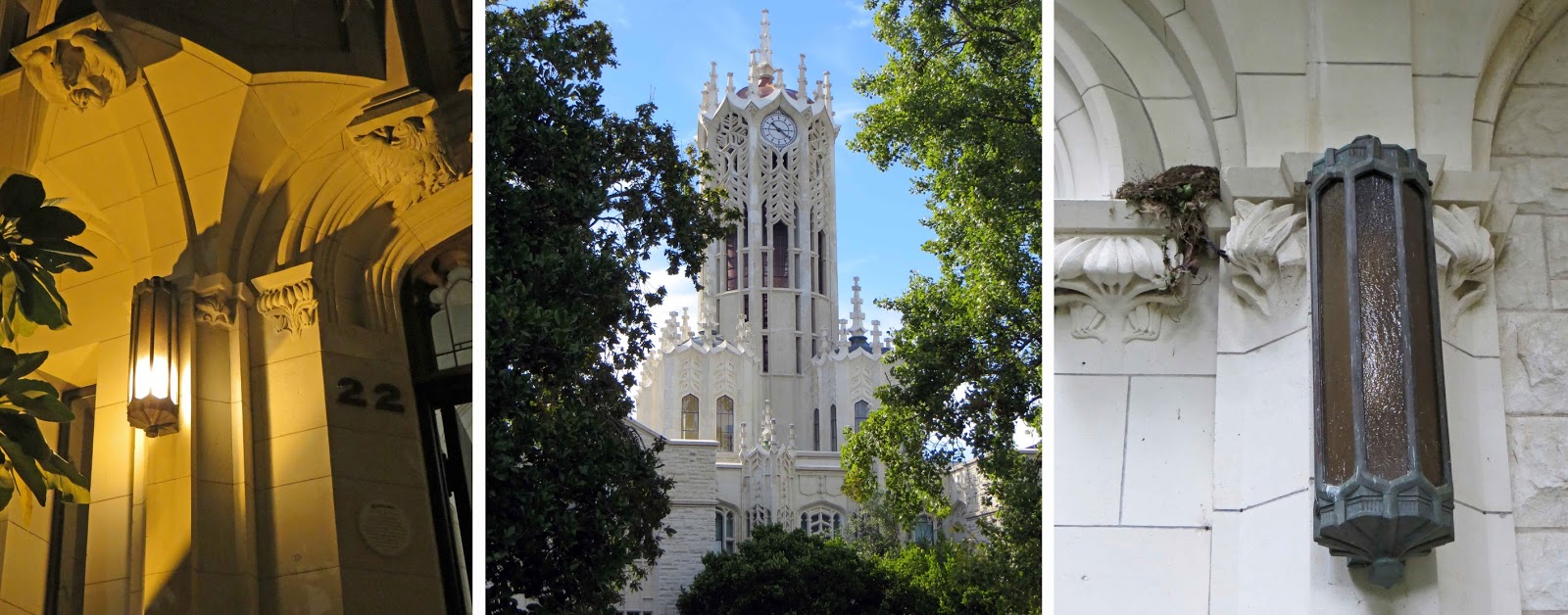
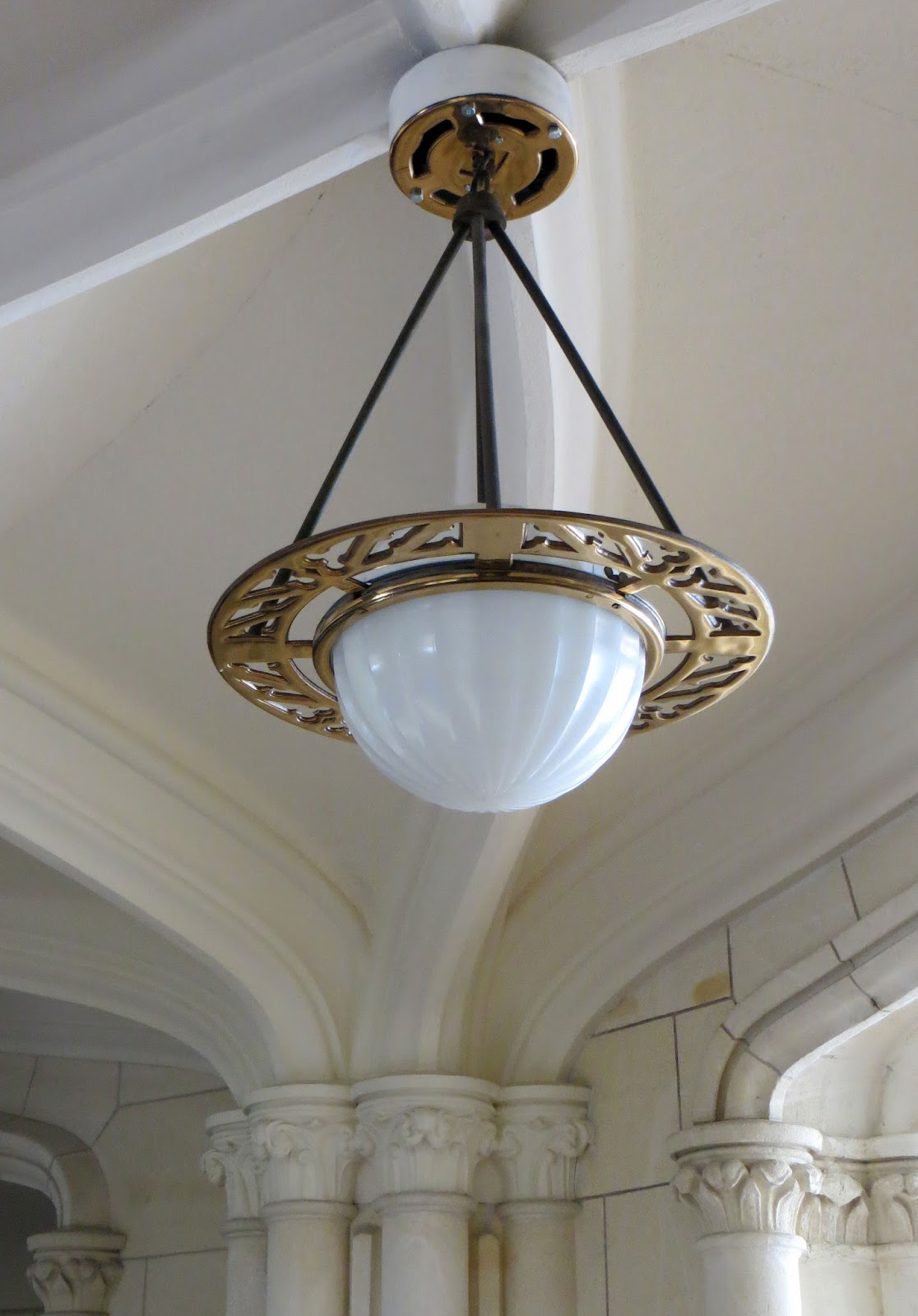
Old Arts or
Despite its rather flamboyant design, this is one of my
favourite Auckland
Nowadays, the Clock Tower you can see in my photo (above) is symbolic of the University of Auckland but the building was controversial when first built in 1926, being described as ‘un-British and out of harmony with our national character’ – this, obviously, before New Zealand had really developed a character of its own!
Once again we see the influence ofChicago style in an Auckland
Nowadays, the Clock Tower you can see in my photo (above) is symbolic of the University of Auckland but the building was controversial when first built in 1926, being described as ‘un-British and out of harmony with our national character’ – this, obviously, before New Zealand had really developed a character of its own!
Once again we see the influence of

Grey Lynn Library,
Grey Lynn
To another library building now, and this one still functions
as a library and is very much the central hub of the Grey Lynn community.
Designed by notable Auckland

Ports of Auckland Red Fence, Auckland
And we finish with that red herring I mentioned: one of the lamps from the magnificent red-painted
wrought iron fence that separates Auckland Quay
Street
These lamps may be a little early to count as Art Deco but, with those splendid lions and heads (of Neptune / Poseidon?), they are such impressive statements of power, strength and authority that I just had to include them.
These lamps may be a little early to count as Art Deco but, with those splendid lions and heads (of Neptune / Poseidon?), they are such impressive statements of power, strength and authority that I just had to include them.


