Get your walking shoes laced up, we’re heading out
for another walk. There’s a nip in the wind so don’t forget your hat and gloves,
and tuck your jeans into your socks – after the recent rain, it could be a bit
mucky in places. Today I can promise you some good exercise (we’ll be walking
about 8kms), peppered with a few snippets of interesting history and garnished
with trees, lots and lots of lovely trees.
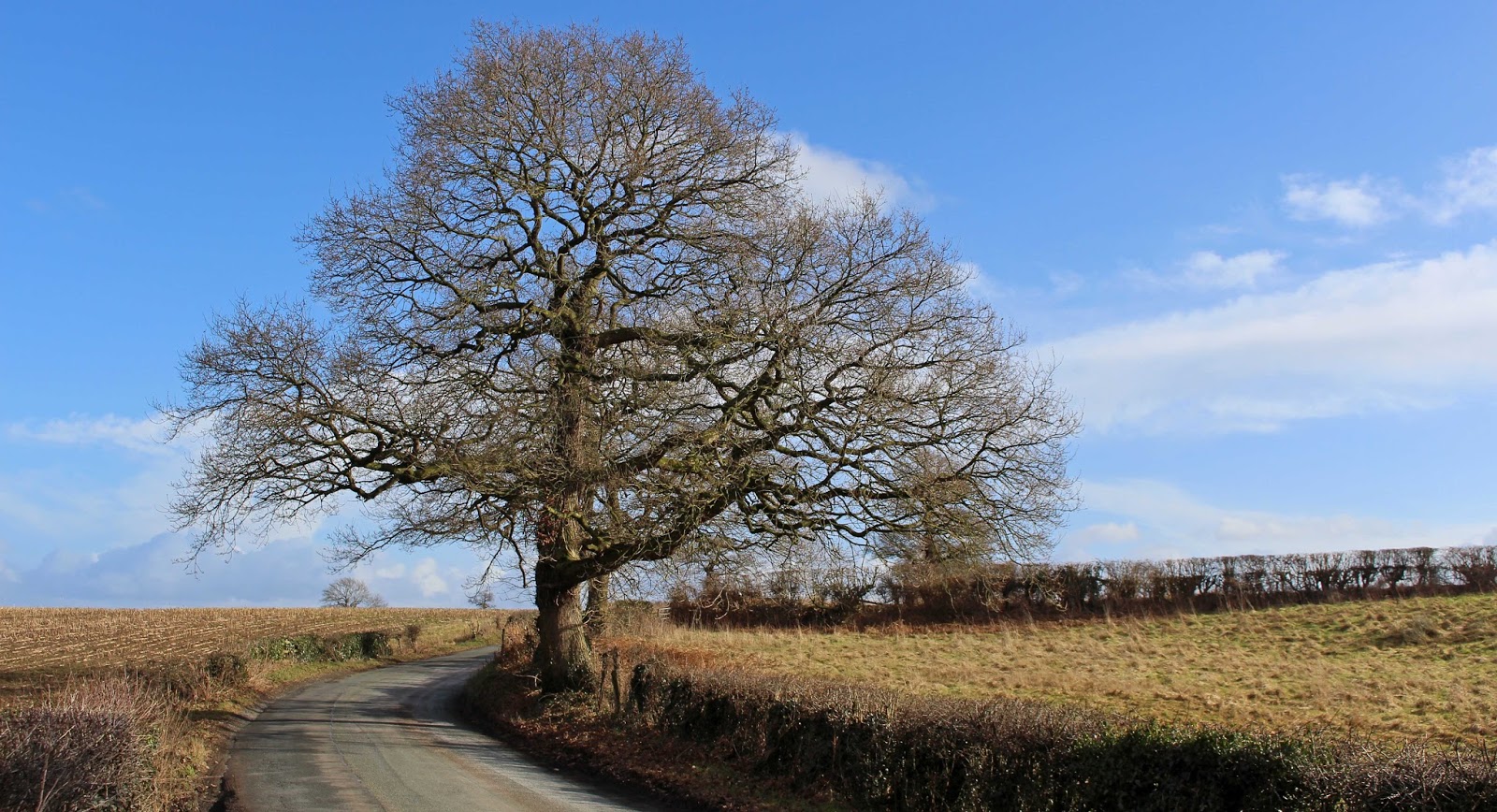
From the house we head down a typical Cheshire
country lane, which would once have been part of the pedestrian route for local
parishioners between the church at Great Budworth (where baptisms and marriages
were conducted) and the 13th century church at Lower Peover (where the dead
were buried). It always amazes me to think people have been walking these paths
for hundreds of years.
At the end of the lane, we cross the main road, the
former Roman Road
of Watling Street,
and head into more local history. To our right is the former Holford Millkeeper’s
house, now a private residence – and currently for sale, if you have a spare
£750,000. It’s certainly a lovely setting, though a bit noisy for me, and I’d need to win
the lottery to afford it.
Just down the lane we can see the remains of the mill,
which was built originally in 1324 and finally closed in 1950. There’s not much left now but under the moss and ivy you can still see the
remains of the two wheel pits, either side of the mill building, plus pieces of
the iron wheels and wooden shafts. It must have been impressive in its heyday.
The footpath here has been diverted from its original
route through the middle of Holford Hall farm yard, to give the current owners
some privacy, and now runs through woodland growing on an old lime bed, which
itself sits on top of medieval fish ponds. According to the signboard, the site
was ‘filled in by the Imperial Chemical Company in the 1940s. Lime beds were
created for the disposal of ash and lime, a by-product of the soda ash
industry’ but more on that, and other local industry, in a future blog.
The diverted path is pleasant enough, with views across
a field to Holford Hall, though we’ll get a better view of that later. Firstly,
though, we're going to head around this small wooded area, the rather grandly
named but seemingly unofficial Plumley Nature Reserve. Though entry doesn’t
seem to be encouraged, there are a couple of paths in to the reserve and I have
ventured in – what I found will also feature in my forthcoming industrial blog
post.
We’ll cross the railway line here, and head first
left, then right along sealed roads until we get to the Holford Brinefield
offices. From here, we leave behind the ugly industrial workings of the brine
industry that have scarred this landscape and, turning left again, we head
along a footpath across a couple of fields to reach Holford Moss.
The moss is, in fact, another scarred landscape, once
used by local tenant farmers for cutting peat – you can clearly see where chunks have
been carved out of the ground, though all is now covered by low scrub and
bracken. A mixed woodland has grown up on the old peat cuttings, dominated by
birch but with oak, Scots pine and holly trees also growing well. It’s a
tranquil place for a wander and, to me, has a very ancient feel, though the
peat cutting may well have continued into the 20th century.
At the end of the path through the moss, we head left
at Keeper’s Cottage, along another field-edge footpath that will soon have us back
at the railway line. I love the lead up to the narrow old bridge that crosses
the line – I can imagine farm labourers, horses and carts, and shepherds with
their flocks of sheep all using this route in times past. We cross another
field and skirt round the edge of one more before we reach the long gravel
driveway that leads us back to Holford Hall.

Although the footpath has been diverted around the
Hall, there is a short spur here where we can get a closer view of the Hall and
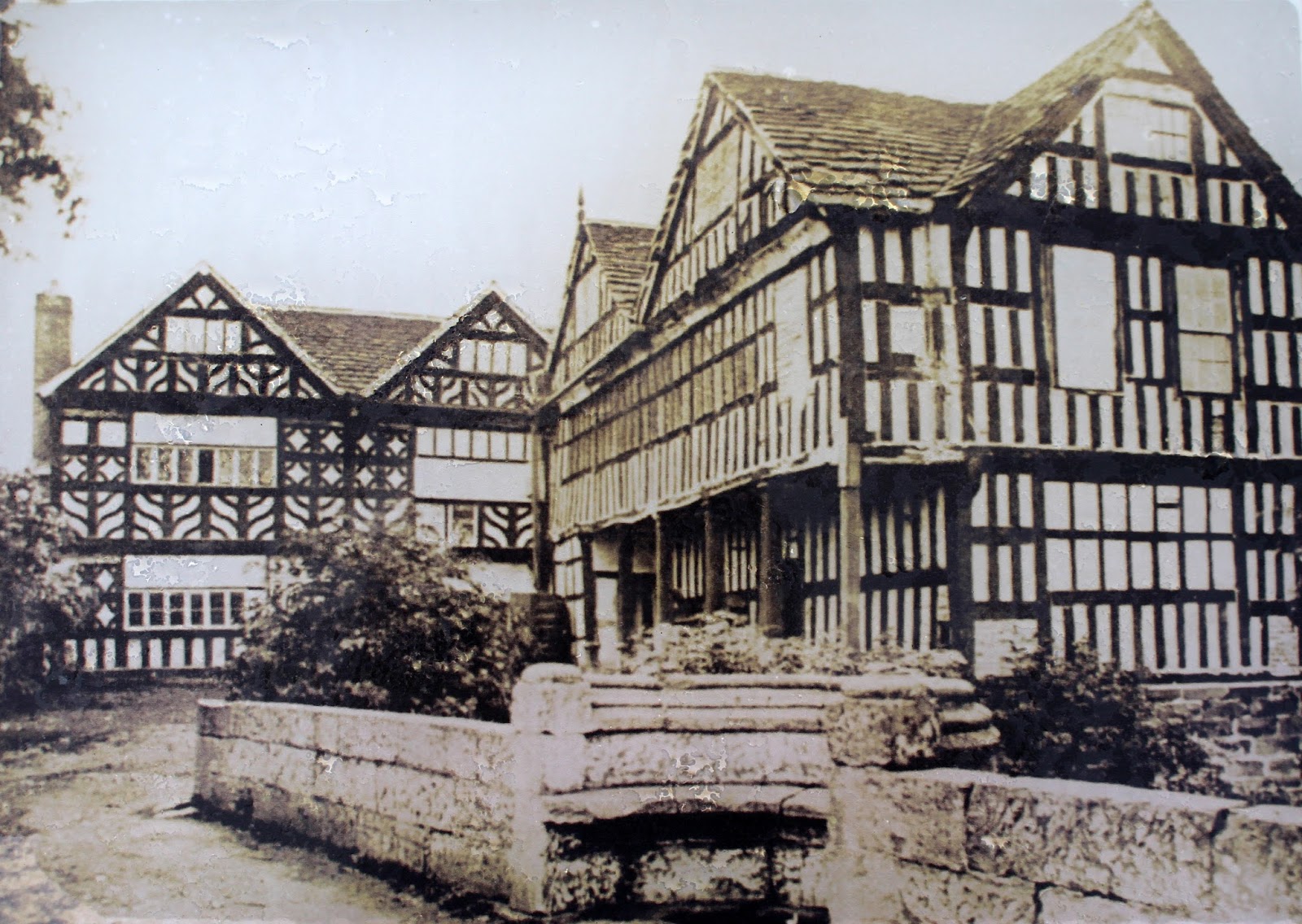
its lovely gardens. The half-timbered, black-and-white section of Holford Hall dates
back to 1601, when it was built for Mary Cholmondeley (pronounced ‘Chumley’)
after the death of her husband Sir Hugh. The section we see today was the
centre of a quadrangle (see the old photo, at right), the south wing of which collapsed and was demolished in
1844. The north wing was, sadly, demolished and replaced by the current large
brick structure in the 1880s. As you might guess, both this old section of the
hall and the 17th-century sandstone arched bridge that spans the moat are heritage
structures and Grade II listed.

Well, that peek at Holford Hall means we’ve almost
reached the end of today’s walk. From here, we retrace our steps, past the old
mill, over the former Roman road and homewards up the country lane. I hope
you’ve enjoyed your armchair tour of Holford’s attractions.