It was 9am and we were
off to the Sahara (!) … eventually.
We headed off from
Midelt into the Eastern High Atlas mountains via a spectacular road that curved
up through a gorge of the Ziz river. Juniper trees grew here and there amongst
the rocks – once they covered these mountains. Now reforestation is underway,
but with pine trees, to try to prevent erosion and combat the expansion of the Western Sahara desert.

We crossed the mountain
range through one of only three passes that transect these mighty peaks, this
one at 1900 metres absl. On the other side we passed one of the many earth dams
used to provide hydroelectric power and irrigation to the local area. The water
was an incredible turquoise colour and looked particularly spectacular against
the ochre colours of the surrounding barren landscape.
For lunch we were
having a picnic so we stopped at a small town for drinks and cake and to buy
picnic fare in the local market. The mercury was hitting 40 degrees as we
headed out of town and we were all wondering how Issam was going to conjure up
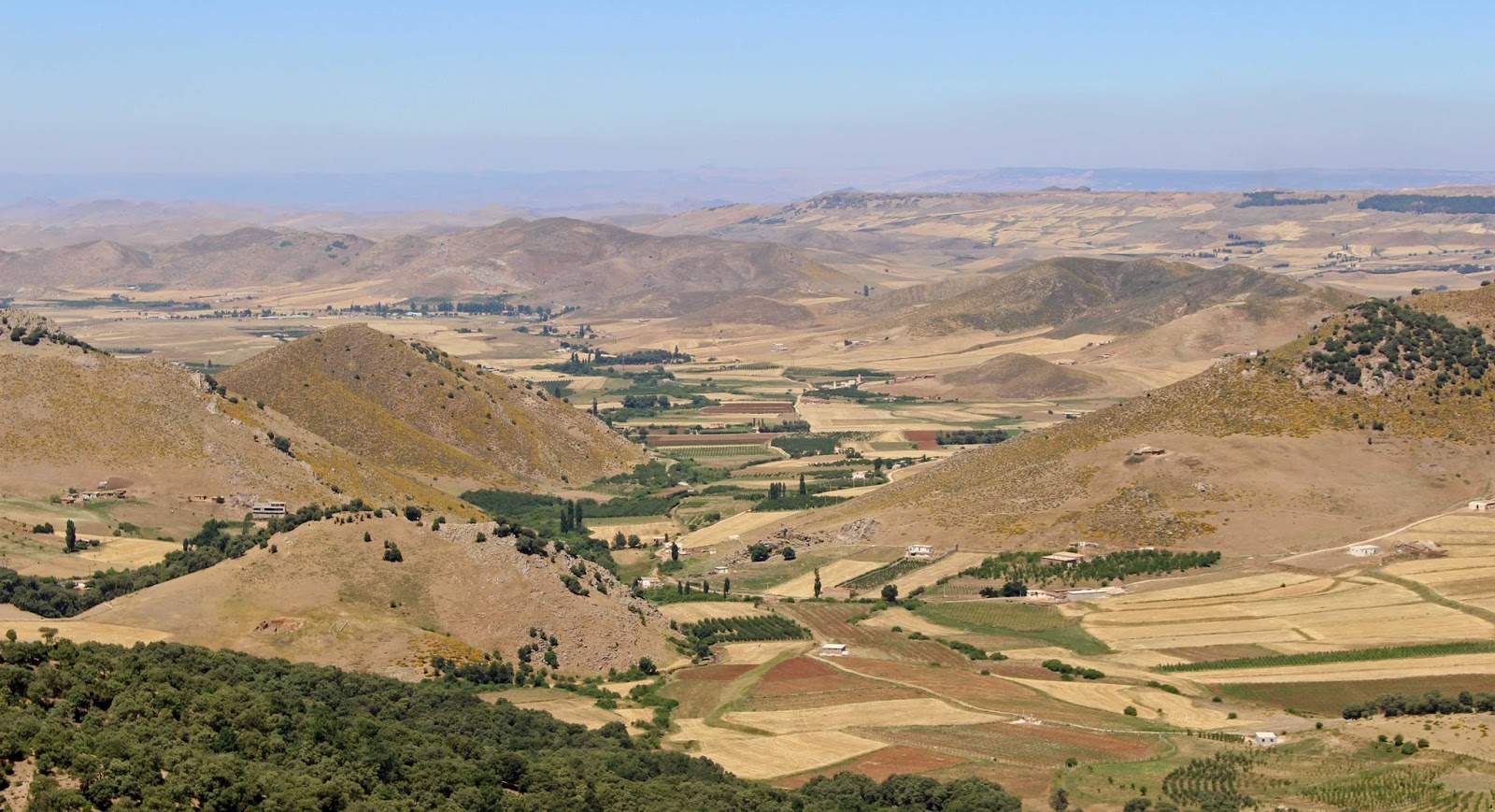
a shady place for our picnic. But then, as if my magic, a great rift appeared
in the earth in front of us, revealing a long winding GREEN valley, with houses
and shops, schools and mosques bordering the vivid green, fertile land on
either side of a river.

This was the Oasis du
Tafilalet, an 65,000 hectare area, registered on the Ramsar list as a wetland site of international significance as it is ‘an important
wintering site for migratory birds’, ‘hosts remarkable populations of Ruppell’s
Bat … and of the Sand Cat’.

We stopped at the top
of the escarpment for some photos, then headed down into the valley and found
ourselves a shady spot under olive trees and date palms to enjoy our picnic. We still had some travelling to do to get to the desert but didn't want to arrive too early as it would be too hot to ride. So, we stopped at a lovely hotel, seemingly in the middle of nowhere, to enjoy cold drinks and chill by their pool for an hour or so. The place was more luxurious than any of our lodgings – how the other half live!

Then it was onwards towards the desert, passing many nomads’ tents and their
large flocks of sheep and goats, before heading into an ever more barren and
stony landscape and then, finally, we could see red sand dunes rising in the
distance. We all grew more
excited as those dunes grew closer, as we saw our first local camels by the
roadside, as we approached the auberge where we would leave our luggage, as
Issam wound scarves around everyone’s heads to make them look the part, as we
picked up our saddle blankets and headed for our camels.
I felt a little trepidation
– after all, a camel’s back is a long way from the ground and it was many many
years since I had ridden even a horse, let alone anything so tall! In fact, the
most difficult thing was swinging my leg over the beast’s back – after that, it
was a piece of cake, as long as you remembered to hold on tight and lean back
when going down hill, or rather down dune.

The camels were all
castrated males, the oldest about 16, and well used to carrying tourists on the
one-hour trek into the desert. My camel had been named Bob Marley by a previous
tourist and a placid sure-footed beast he was, fortunately. He was also
trustworthy enough to be placed in the lead position of one of two lines of
camels, with each being tied to the back of the beast in front and a guide
leading the front camel.

The swaying movement
was interesting and the saddle blankets very necessary – most of us still
suffered from a little soreness in the nether regions for a couple of days – a
camel’s hump is not very soft to bump against! Not having stirrups also meant I
had pins and needles in one foot by the time we reached our camp but what an
experience! The colours and the patterns of the sand on the dunes changed
continuously as dusk approached and it was easy to imagine that you were in the
middle of nowhere.

Our camp was a group of
black tents, like the nomad’s use, arranged around a central courtyard where we
ate a delicious dinner of lamb tagines, were entertained by our guides singing
and playing the drums, and ate cake to celebrate my cousin Julie’s birthday.
What a place to be on your birthday!

About 11.30pm, the
tables and stool were cleared away, the mattresses and blankets brought out,
and we made ourselves a bed, some venturing outside the camp to sleep on a sand
dune under the stars, some bedding down in the courtyard, some in the tents. The stars were
certainly intensely bright away from the lights of civilisation and we spotted
some satellites and shooting stars but I couldn’t keep my eyes open very long.
It had been another magical day in Morocco