Showing posts with label Cheshire walks. Show all posts

15 April 2015

Cheshire walks: Around Arley

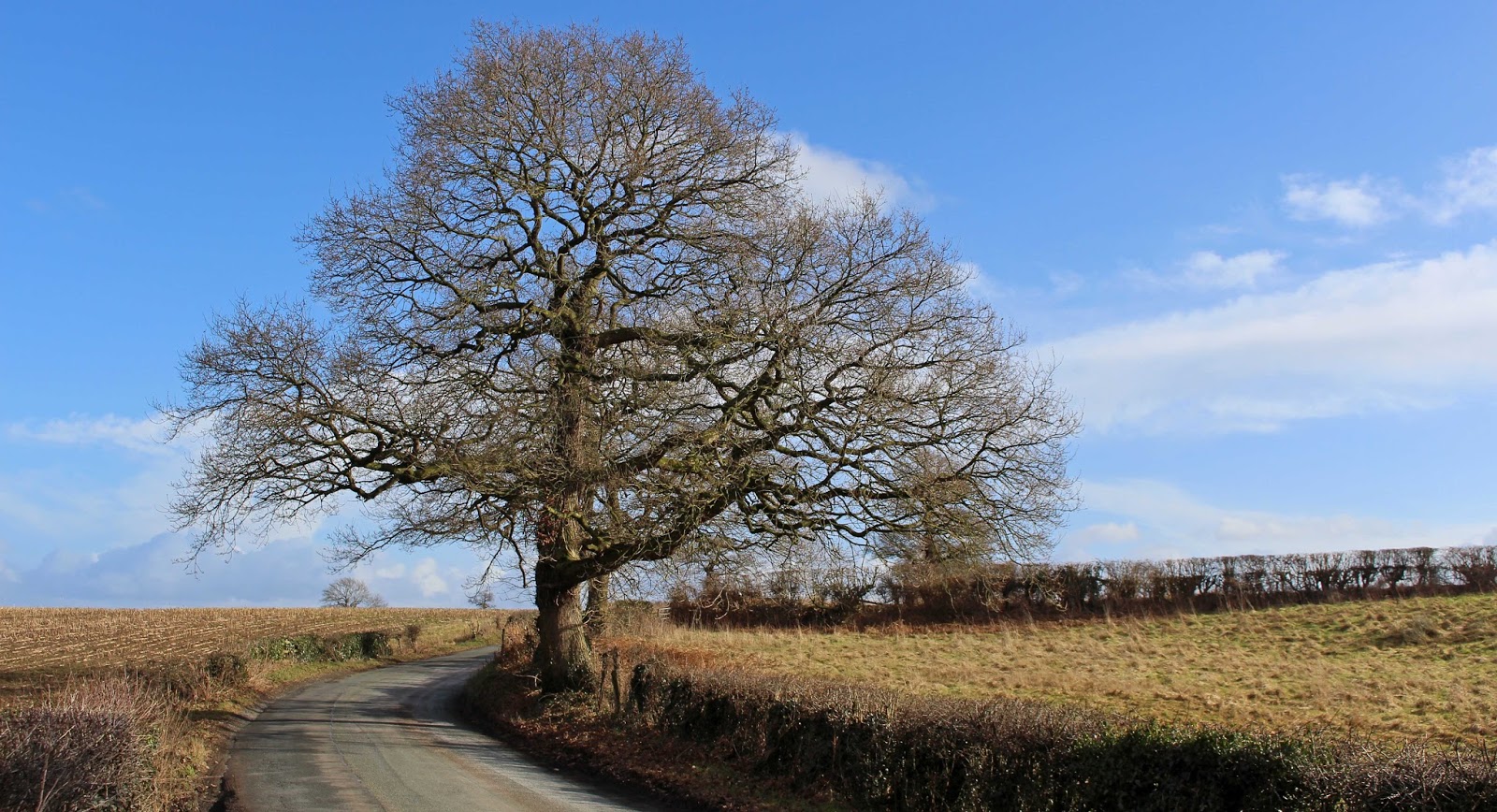
During my six months in Cheshire wending my way around magnificent Arley estate has been one of my favourite pastimes. From my home near Pickmere it’s about 15 kilometres there and back, depending on which paths I tread, and every time I venture there I’m rewarded with a treasury of sights and sounds.


The path ways are numerous – one forms part of the North Cheshire Way, another is a bridle way, others are simply footpaths along which people have walked for generations. I try to avoid the roads as most are unpleasantly busy (Cann Lane, in particular, is one to avoid) but the smaller lanes are less trafficked and prettily lined with trees.


Rather than describe the various walking options, I’ll let my camera do the talking. The green dots on the map show most of the lanes and footpaths I’ve explored, and the red-dotted path indicates the North Cheshire Way – you can find out more about that on the Long Distance Walkers website. The numbered blue dots pinpoint where my photos have been taken. You can click on the map and images to see them full screen.

As my photos have been taken during winter and early spring, I’m sure the views will be much greener and leafier as spring progresses into summer. I hope my images convince you to don your walking shoes and explore this small part of the beautiful Cheshire countryside. You will not be disappointed!

And don’t forget to visit the grandiose Arley Hall and its superb gardens while you’re in this neck of the woods. You can get a glimpse of my earlier visit to the gardens here.

(1) Arley Road is the main entrance road for most people driving to the Hall so a little busy for walking but with lovely trees.

(2) Much of the long straight section of the North Cheshire Way that leads to Arley is now a concreted farm track
but signs of  its antiquity can be seen in the gnarly old hedgerows and the pretty wildflowers growing by the ditches.

(3) A third approach route is via Arley Mossend Lane. The road sweeps round to the left past attractive Willow Lodge, with its elegant topiary hedges, and to the right is a bridle way (see below) that connects to Budworth Road.

(4) Though it gets a bit muddy after rain, this bridle way can also be used by walkers and provides access to a footpath leading through the grassy fields to Arley Green.

(5) Arley Mossend Lane is edged partly by woodland and partly by open fields, providing expansive rural views - perfect for photographs of impressive cloud formations. Friendly horses are frequently to be found in the fields - bring apples or carrots!
(6) This tiny brick shed sits just outside the boundary of Arley's award-winning gardens - the greenery beyond provides a hint of the horticultural treasures to be discovered within.
(7) Back Lane runs along the northern side of Arley Hall's grounds. Lined with stately old trees, it provides tantalising glimpses of the Hall and its woodland garden.
(8) Photos above and below. At Arley Green the brook widens out to form a small mere, which is home to a variety of water birds - you can just see some swan in the bottom right of the above photo. You can also catch a glimpse of the beautiful old buildings to be found here, including a stunning black-and-white gem. On a calm day, the mere provides stunning relfections.


(9) Photos above and below. Sack Lane is a private road and public footpath, connecting Back Lane with Cann Lane. It is bordered on the northern side by luxuriant old woodland, which is currently (April) awash with wildflowers (the white flowers shown above are wood anemone). On the southern side the fields are also presently dotted with white - the somewhat larger white of ewes and their very cute lambs. The trees on the field boundaries produce nice silhouettes in the winter months.


(10) Another view of Sack Lane, taken in early winter, just because I love these trees!

(11) A cottage and a gatehouse sit half-way along Sack Lane, marking the boundary into Arley. Walkers can also take the lane to the right here and do a circuit back to Back Lane, as shown on the map. There was once a mill on the brook here but few signs now remains of its presence.

(12) This is probably my favourite route to and from Arley, along the footpath that runs across the fields. I'm guessing there was once a hedgerow connecting these old oak trees but that has been removed for easier farming access. A note of caution: one of these fields is edged with an electric fence that must be stepped across, and the fields sometimes contain cows that can be a little overzealous in their curiosity, which some people might find intimidating.

08 March 2015

Cheshire treats: the gardens at Arley

Exploring the footpaths and lanes around Arley has been one of my regular walking circuits this year – it’s about 14 kilometres from where I’m living so a good workout for my legs! – but yesterday was the first time I’d ventured inside the gates.

Arley Hall is home to the Viscount and Viscountess Ashbrook, and his family, the Egerton-Warburtons, have lived there for over 500 years. Each generation has made its mark on the land, and Arley’s magnificent gardens are the product of 250 years of imagination, experimentation and creativity by successive family members.

In 2015 the gardens have been opened to the public from March onwards, earlier than is usual and perhaps a little too early this year, as very few of the spring bulbs and blossoms were in flower on this early March day. Still, this is a garden with lovely bones – magnificent trees, a walled garden, elegant topiary, a series of well-defined garden rooms that leads you through from one wonderful vista to the next – and it is much easier to admire and enjoy these structural features without the eye constantly being diverted by the prettiness of colourful flowers. This is truly a garden to be enjoyed in all seasons. Take a walk with me …


The entry road is a statement in itself, flanked initially by woodland, then opening out on to large horse-studded paddocks.


The entrance is enticing – look at those trees, the rich warm bricks, the mid-19th-century archway through the old barn, the mid-18th-century clock and that weathervane. I’m hooked already!


Having recently blogged about lime avenues, I was amazed by this most unusual pleached-lime example, planted in 1856. Apparently, the limes are clipped annually to maintain their juvenile state, so they never produce flowers or fruit or grow to the size of mature lime trees.

The Grade I-listed Cruck Barn (‘cruck’ is the name of those huge oak beams running down each side) dates from around 1470 and was originally used to store corn sheaves prior to threshing. The herringbone brick floor is not original, having been laid in 1976 to a design by Elizabeth, Viscountess Ashbrook.

My exploration of the gardens began in The Grove, an informal garden in a woodland setting, studded with lovely pieces of sculpture, many not-yet-flowering shrubs, an exotic arboretum, and a large assortment of rhododenrons and azaleas. I did find some flowers to appreciate.


Back to the formal gardens - one of the views from the flower fountain, by Tom Leaper, which sits at the centre of the Walled Garden.

The impressive Ilex Avenue, with its seven pairs of holm oaks that have been pruned to the shape of cylinders.

The Fish Garden, a sunken garden with a small central pond, was created in 1930 on the former bowling green. I love the rounded shapes of the topiary bushes.

Another view of the Quercus Ilex Avenue. Those cylinders are about 30 feet tall and were planted by the present Viscount’s great-great-grandfather Rowland Egerton-Warburton in the 1830s.


One of my favourite things in the garden was the Tea Cottage, a tiny half-timbered building dating from the eighteenth century, that was once used for garden tea parties. Inside, you could almost hear the laughter of children past.

Though spring has not yet really sprung at Arley, there were some flowers, like this prolific-blooming polyanthus and a little touch of New Zealand lighting up one of the glasshouses, the kowhai.


A view along the famed double herbaceous border, towards the Alcove, a beautiful enclosed garden seat that acts as a focal point at one end. This border dates from 1846 and is thought to be the earliest to be planted in England. I particularly liked the topiary divides between the beds – more striking sculptural elements.

Looking back towards Arley Hall along the Furlong Drive, a 200-metre walk that was added to the gardens in 1856.

Arley Hall is only open to the public on Tuesdays, Sundays and Bank Holidays. At other times, it can be hired for private functions and is a favourite wedding location for the well-heeled. The vintage wedding car looked perfectly placed when I visited, liked a scene from history.


One last little gem I found tucked away by the toilets. Tick, tock, the bench sat by the clock!

And what better way to finish a perfectly magical day than to have Mother Nature put on one of her spectacular cloud displays as I slowly wended my way homewards.

24 February 2015

Cheshire walks: Holford Mill, Moss and Hall

Get your walking shoes laced up, we’re heading out for another walk. There’s a nip in the wind so don’t forget your hat and gloves, and tuck your jeans into your socks – after the recent rain, it could be a bit mucky in places. Today I can promise you some good exercise (we’ll be walking about 8kms), peppered with a few snippets of interesting history and garnished with trees, lots and lots of lovely trees.

From the house we head down a typical Cheshire country lane, which would once have been part of the pedestrian route for local parishioners between the church at Great Budworth (where baptisms and marriages were conducted) and the 13th century church at Lower Peover (where the dead were buried). It always amazes me to think people have been walking these paths for hundreds of years.


At the end of the lane, we cross the main road, the former Roman Road of Watling Street, and head into more local history. To our right is the former Holford Millkeeper’s house, now a private residence – and currently for sale, if you have a spare £750,000. It’s certainly a lovely setting, though a bit noisy for me, and I’d need to win the lottery to afford it.


Just down the lane we can see the remains of the mill, which was built originally in 1324 and finally closed in 1950. There’s not much left now but under the moss and ivy you can still see the remains of the two wheel pits, either side of the mill building, plus pieces of the iron wheels and wooden shafts. It must have been impressive in its heyday.

The footpath here has been diverted from its original route through the middle of Holford Hall farm yard, to give the current owners some privacy, and now runs through woodland growing on an old lime bed, which itself sits on top of medieval fish ponds. According to the signboard, the site was ‘filled in by the Imperial Chemical Company in the 1940s. Lime beds were created for the disposal of ash and lime, a by-product of the soda ash industry’ but more on that, and other local industry, in a future blog.

The diverted path is pleasant enough, with views across a field to Holford Hall, though we’ll get a better view of that later. Firstly, though, we're going to head around this small wooded area, the rather grandly named but seemingly unofficial Plumley Nature Reserve. Though entry doesn’t seem to be encouraged, there are a couple of paths in to the reserve and I have ventured in – what I found will also feature in my forthcoming industrial blog post.

We’ll cross the railway line here, and head first left, then right along sealed roads until we get to the Holford Brinefield offices. From here, we leave behind the ugly industrial workings of the brine industry that have scarred this landscape and, turning left again, we head along a footpath across a couple of fields to reach Holford Moss.


The moss is, in fact, another scarred landscape, once used by local tenant farmers for cutting peat – you can clearly see where chunks have been carved out of the ground, though all is now covered by low scrub and bracken. A mixed woodland has grown up on the old peat cuttings, dominated by birch but with oak, Scots pine and holly trees also growing well. It’s a tranquil place for a wander and, to me, has a very ancient feel, though the peat cutting may well have continued into the 20th century.


At the end of the path through the moss, we head left at Keeper’s Cottage, along another field-edge footpath that will soon have us back at the railway line. I love the lead up to the narrow old bridge that crosses the line – I can imagine farm labourers, horses and carts, and shepherds with their flocks of sheep all using this route in times past. We cross another field and skirt round the edge of one more before we reach the long gravel driveway that leads us back to Holford Hall.


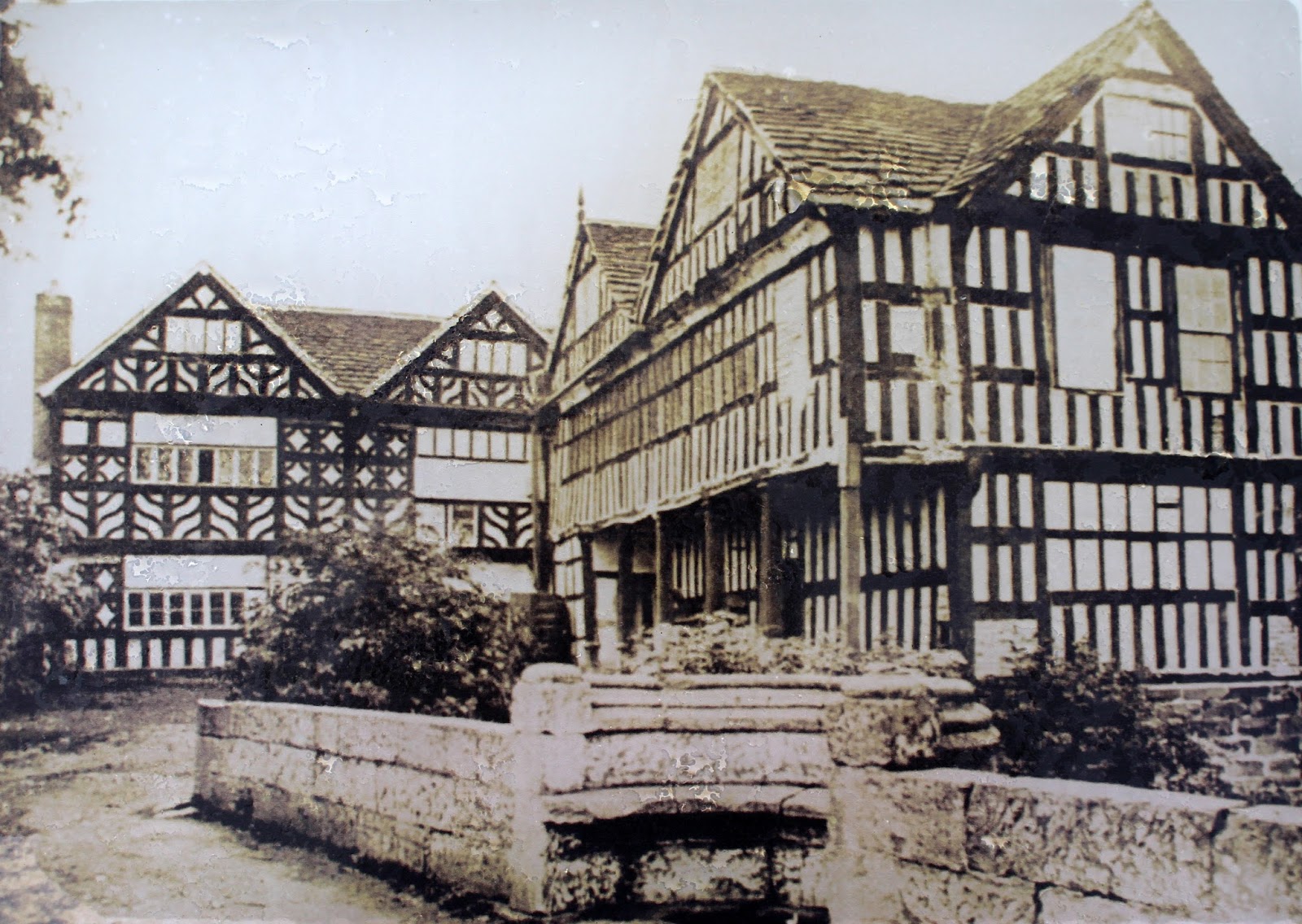
Although the footpath has been diverted around the Hall, there is a short spur here where we can get a closer view of the Hall and its lovely gardens. The half-timbered, black-and-white section of Holford Hall dates back to 1601, when it was built for Mary Cholmondeley (pronounced ‘Chumley’) after the death of her husband Sir Hugh. The section we see today was the centre of a quadrangle (see the old photo, at right), the south wing of which collapsed and was demolished in 1844. The north wing was, sadly, demolished and replaced by the current large brick structure in the 1880s. As you might guess, both this old section of the hall and the 17th-century sandstone arched bridge that spans the moat are heritage structures and Grade II listed.

Well, that peek at Holford Hall means we’ve almost reached the end of today’s walk. From here, we retrace our steps, past the old mill, over the former Roman road and homewards up the country lane. I hope you’ve enjoyed your armchair tour of Holford’s attractions.


16 February 2015

More weathervanes of Cheshire

After a week of much meandering through the Cheshire countrywide – I clocked up 65 kilometres (40 miles) last week, I’ve discovered a lot more weathervanes so thought I’d share a few more of these handsome hand-crafted artworks.

A traditional cock weathervane, found on a farmhouse in Budworth Heath

‘You who travel with the wind, what weathervane shall direct your course?’ ~Khalil Gibran

So cute! The ducks are at a house near Wincham and the robin on an old outbuilding near Budworth Heath
‘Kites rise highest against the wind - not with it.’ ~ Winston Churchill

Is the occupant a hunter? Found at Plumley

‘It was one of those cold nights at the end of October, when the weathercocks, shaken by the north wind, turn giddily on the high roofs, and cry with shrilly voices, “Winter! - Winter! - Winter is come!”' ~ Erckmann-Chatrian, ‘The Child Stealer’

A foxy favourite from Comberbach
‘The wind shows us how close to the edge we are.’ ~ Joan Didion

Very inventive and not a beehive in sight, on the ground. Found near Pickmere
‘The clouds were flying fast, the wind was coming up in gusts, banging some neighbouring shutters that had broken loose, twirling the rusty chimney-cowls and weathercocks, and rushing round and round a confined adjacent churchyard as if it had a mind to blow the dead citizens out of their graves.’ ~ Charles Dickens, Little Dorrit

Any guesses as to the owner's occupation? Found near Marston

‘Through woods and mountain passes / The winds, like anthems, roll.’ ~ Henry Wadsworth Longfellow

Prancing horses are popular. These were in Comberbach and Plumley.
‘I’m going to imagine that I’m the wind that is blowing up there in those tree tops. When I get tired of the trees I’ll imagine I’m gently waving down here in the ferns – and then I’ll fly over to Mrs Lynde’s garden and set the flowers dancing – and then I’ll go with one great swoop over the clover field – and then I’ll blow over the Lake of Shining Waters and ripple it all up into little sparkling waves. Oh, there’s so much scope for imagination in a wind!’ ~ L. M. Montgomery, Anne of Green Gables

My favourite, particularly as it decorates an old rectory near Marston
I’ll finish today with a riddle from J.R.R. Tolkien’s The Hobbit – can you guess the answer?

‘Voiceless it cries, Wingless flutters, Toothless bites, Mouthless mutters.’