09 April 2015

British birds: goose, swan and duck

Cheshire is one of the most water-filled English counties so it’s no surprise I’ve encountered a lot of water birds during my walks in the local countryside. These geese, swan and ducks are among the more common species.

Rather than populate this post with a lot of facts and figures that can easily be obtained elsewhere, I’ve just added a few interesting snippets of information I’ve discovered about each species.

Canada Goose (Branta canadensis)
Let’s start with an immigrant, originally introduced to English parkland around 1665, specifically for King Charles II to add to his wildfowl collection in St James’s Park in London. They have since gone forth and multiplied to the extent that they are frequently considered a nuisance. As well as being aggressive pursuers of the bread so many people dispense freely in parks (watch out for nips!), they also have the digestive capacity to process three times as much grass as the average sheep and the more alarming ability to poo every four minutes!

That's a Greylag mixing with his Canada Geese friends above right


Greylag Goose (Anser anser)
According to the British Trust for Ornitholgy (BTO) website, the Greylag Goose is ‘traditionally eaten at Michaelmas’ and ‘Mrs Beeton recommends cooking with a glass of port or wine to which has been added a teaspoon of mustard, some salt and a few grains of cayenne pepper’. If, like me, you’d prefer not to eat these beautifully patterned creatures, you might want to worship them instead. More than 5000 years ago, the goose was associated with Gula, the fertility deity of the citizens of the Tigris-Euphrates city-states. In ancient Egypt, geese were a symbol of the sun god Ra, and in ancient Greece and Rome geese were sacred to Aphrodite.


Egyptian Goose (Alopochen aegypticus)
It might look like a goose and be called a goose but the Egyptian Goose is not really a goose at all. It’s more closely related to the Shelduck and occasionally shares that duck’s habit of nesting in a burrow or hole in the ground, though it has also been known to build a nest as high as 80 feet above the ground in a tree. The bird was introduced to Britain in 1678 as an ornamental wildfowl species, another for the king’s collection of birds in St James’s Park in London, but has since established itself in the wild, though it does still have a penchant for the grounds of large halls and estates, with their perfect habitat combination of old woodland and extensive areas of water. My photo was taken at Tatton Park Estate near Knutsford.

Mute Swan (Cygnus olor)
In England, the ancient practice of swan-upping still takes place each July on the river Thames. Swan used to be owned exclusively by the Crown (and a few select favourites of the King or Queen) so swan were caught every year and marked, on the upper bill, with a system of nicks and cuts to indicate ownership. Fortunately, these days, the birds are rather more humanely banded instead by the Queen’s Swan Marker and the swan uppers of the descendants of two centuries-old medieval guilds, the Worshipful Company of Dyers and the Worshipful Company of Vintners.  

Cygnets and juvenile Mute Swan

Female Tufted Duck at left and male at right
Tufted duck (Aythya fuligula)
The BTO website reports that the population of the cute little Tufted Duck expanded rapidly during the late 19th and early 20th centuries due to the colonisation of British waterways by the small freshwater bivalve, the Zebra Mussel, the perfect food for a duck that loves to dive. They are fascinating to watch when hunting for food and I particularly love their floppy little top-kot.


Female Mallard


Mallard (Anas platyrhynchos)
Though male and female Mallard are so different they were originally thought to be two different species, today they are what almost everyone imagines when they hear or read the word ‘duck’, and they are the bird people most loved to feed with old scraps of bread. Please don’t! As Britain’s Canal and River Trust has recently been warning, with an estimated 6 million loaves of bread being thrown into canals and waterways every year, bread is a serious problem for the ducks’ environment, and it’s not very healthy for the ducks either. Click on this link to read about the more natural alternatives. 

Wild mallards are thought to be the original source for at least 20 officially recognised breeds of domestic ducks, like the Aylesbury and the Chocolate Magpie, and countless other ‘Manky Mallards’, a colourful expression commonly used by to describe the motley menagerie of wild and domestic mallards.


Aylesbury Ducks, living the wild life at Pickmere Lake

Chocolate Magpie Ducks, also reverted to the wild side

Manky Mallards

Many of the fact-lets for this blog post came from that most excellent publication, Birds Britannica, Mark Cocker and Richard Mabey, Chatto & Windus, London, 2005, as well as from the website of the British Trust for Ornithology.   

06 April 2015

A visual celebration of Spring

I've always loved the Springtime but living through an English winter, with its short days, frequent cloud and colder temperatures, has made me appreciate Spring even more. This has been my Springtime so far ...

First, the crocuses started to bloom

Catkins on the Hazel trees

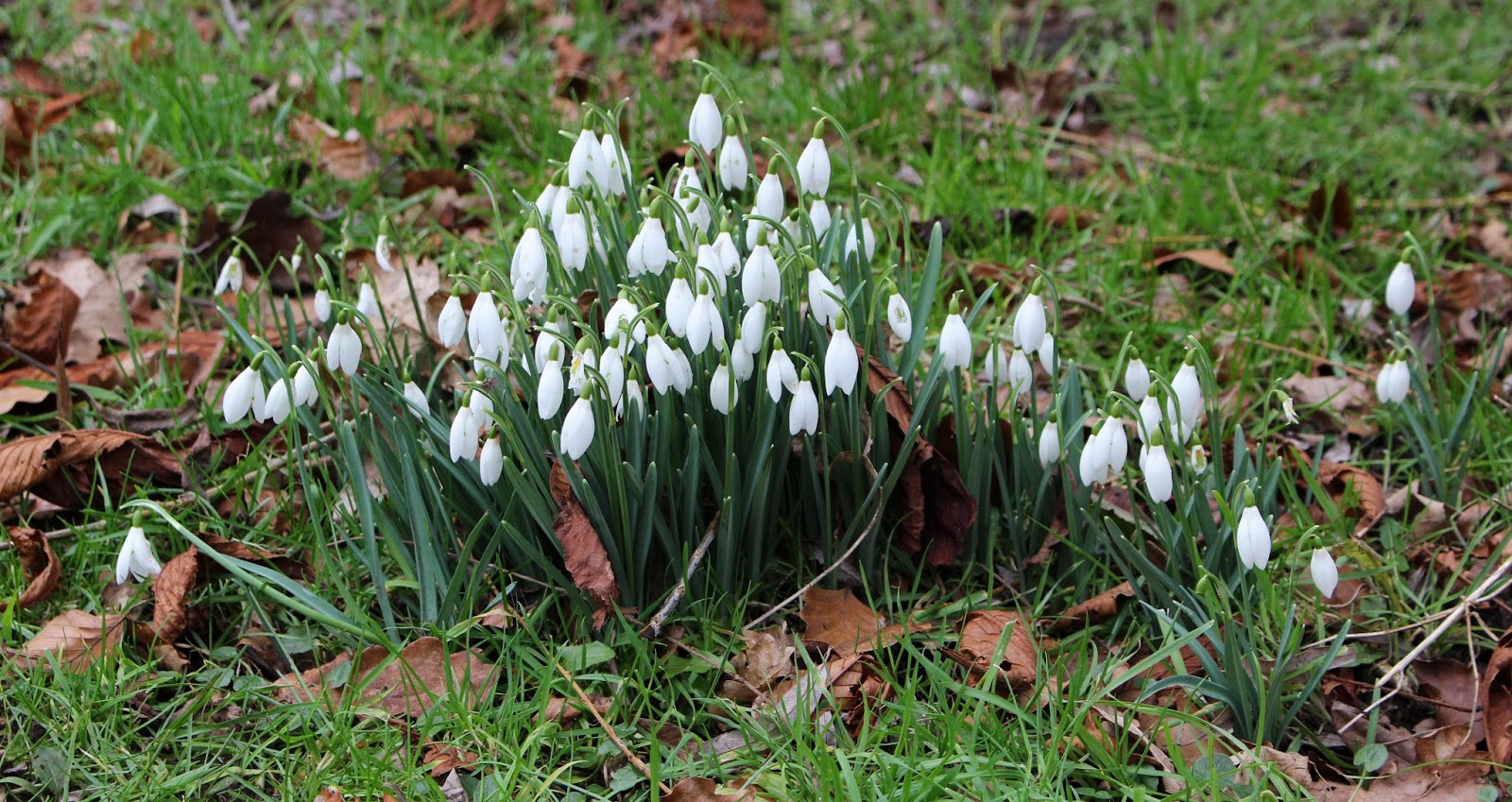
Snowdrops everywhere

More crocuses, and the bees started to appear

A bit of hanky panky at Budworth Mere

The hanky panky that resulted in this lovely sight must've been about 5 months ago

So cute, and growing fast

In gardens and along the roadsides, the daffodils started to bloom

Daffodils lining the lime walk at Great Budworth

More blossom, more bees

Bumblebee on daffodil - quintessential Spring!

The seven-spot ladybirds have emerged from their hibernation

Flowers about to burst open on an Ash tree

First butterfly in the garden, a Small Tortoiseshell

01 April 2015

British birds: a waterbird selection

Cheshire is one Britain’s most water-filled counties so I’ve encountered a wealth of waterbirds during this past six months of walking in the local countryside. Here are just a few of them.


Moorhen (Gallinula chloropsis)
This bird looks very familiar to me as we have a similar bird in my native New Zealand and I remember being surprised during a visit to the Amazon jungle in Peru to see a bird I recognised from home – their Purple Gallinule (Porphyrio martinicus) looks remarkably like our Pukeko (Porphyrio melanotus melanotus). All three birds make the same high-pitched squeak and have that same cheeky strut, continuously flashing their white undertail as they sashay along, though there are some colour differences. The British moorhen has a yellow tip to its beak and yellowish-green legs and its body colouring seems less vibrant to my eye.

The moorhen is widespread throughout Britain, second only to the mallard in the extent of its habitable range. Prior to 1954, when nest predation was made illegal, eggs were regularly taken for food – apparently they go well with bacon! The bird itself can be shot and eaten during the season, usually from 1 September to 31 January, though I’m not sure how palatable their strong dark meat would be, and I certainly wouldn’t be tempted to kill or eat a bird that is so pretty and so highly entertaining.

Coot (Fulica atra)
The common coot is also considered a game bird in Britain, with the same hunting season as the moorhen, though I would certainly never be tempted to kill one of these either. Maybe it’s something to do with birds and water, but these are also captivating to watch. The bird’s engaging silliness is probably where the idiom ‘silly coot’, used to describe a foolish person, originated. And the coot’s white head blaze is the source of another common expression ‘to be as bald as a coot’, though bald here does not mean hairless; an alternate definition of bald is ‘marked or streaked with white’. Apparently, this phrase is an ancient one, first noted in the monk John Lydgate's 1430 publication Chronicle of Troy. 

The coot is also very familiar to me as it was introduced to New Zealand in 1958 and, like most immigrants, has made itself right at home. I am constantly fascinated by its bizarre lobed feet, a cross between the long toes of wading birds and the webbed feet of swimming birds like ducks.


Grey Heron (Ardea cinerea)
I’m pleased to report that the Grey Heron is the most widespread large predatory bird in Britain and it is flourishing, with an estimated 12205 occupied nests in 2010. Herons nest communally, usually in tall mature trees, but they can and do adapt to their local environment. Some heronries are known to have been in continuous use for hundreds of years and the largest heronry in Britain is in a private wood on the north side of Budworth Mere, though I’ve seen very few heron during my frequent walks along the southern shores of that lovely lake.

This is another bird the Brits used to eat – from the early medieval period right through to the nineteenth century it was an important and relatively expensive table item. Historically, the heron was a favourite target / victim of falconry and, in order for the well-heeled to continue their enjoyment of the sport, the heron's protection was enshrined in law (being found guilty of a second offence against a heron could result in the loss of your right hand, a third in death!). Once falconry lost its popularity, the heron lost its protection and, in fact, the bird now gets persecuted by fishermen who accuse it of taking ‘their’ fish. 

Personally, I think it’s the heron’s fish and I can’t help but feel sorry that this beautiful bird should suffer due to the sporting whims of humans.

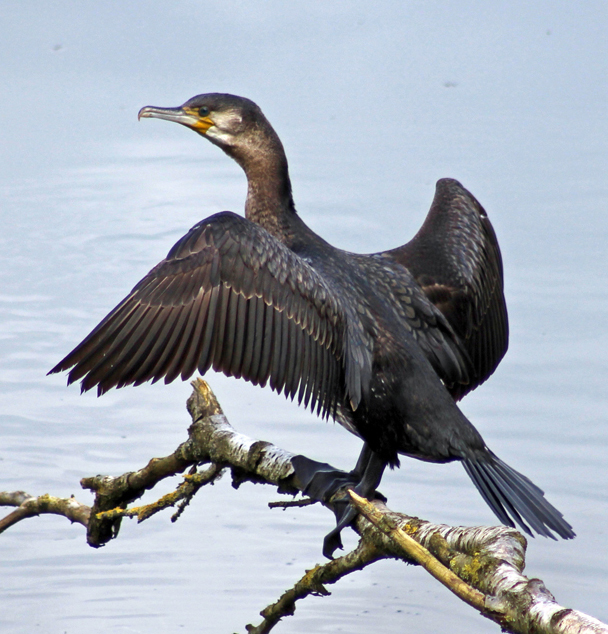
Great Cormorant (Phalacrocorax carbo)
Cormorants are common around the world – the Chinese have long been known to train domesticated birds for fishing and, in 17th-century England, it was also a court fashion to tame cormorants for fishing, a trend so prevalent that the royal household included a Master of the Cormorants.

These large and very distinct birds – to me quite reptilian in appearance – can be found throughout the UK, in their preferred habitats of rocky coastlines and coastal estuaries, as well as on inland lakes and waterways. Though they also suffer bad press from fishermen, the birds are particularly well regarded in Liverpool, where the Liver Bird – actually a cormorant – is the city's emblem.

Great Crested Grebe (Podiceps cristatus)
I’ve been delighted by this Grebe’s mating display at Budworth Mere in recent days. They make a rather noisy but thoroughly entertaining exhibition of head shaking and neck swaying and bill touching that is a joy to watch, especially with their vibrant neck plumage highlighting their every move. It comes as no surprise that those pretty plumes were once prized by early Victorian milliners to decorate their more extravagant creations. That usage, and the fact that the fine soft feathering on the bird’s body was also valued for costume adornment, meant the Great Crested Grebe was one of Britain’s rarest breeding species by the mid-1800s.

Luckily, laws were enacted to protect Britain’s water birds but the Grebe's recovery can also be attributed to mankind’s activities – and not in the way you might imagine. The massive increases in both road building and house building following the Second World War required enormous amounts of gravel, and the Great Crested Grebe was one of the birds that benefitted from the gravel pits once they had been abandoned and filled with water. It’s a fitting testament to how well Nature can recover from man’s interference in the landscape.

Many of the fact-lets for this blog post came from that most excellent publication, Birds Britannica, Mark Cocker and Richard Mabey, Chatto & Windus, London, 2005.