Showing posts with label Trujillo. Show all posts

24 September 2012

Otuzco: a slice of rural life

On our last day in northern Peru, we decided to head out of the city into the countryside or, rather, into the highlands behind Trujillo. Our guide was 23-year-old Dilser, whom we had met during one of our outings with Henry. He was a pleasant and knowledgeable young man, and we had a good day with him and driver Leo. It took two hours of slow, careful driving to get there but we were glad of Leo’s caution as the roads were winding and hazardous. We passed two buses that had obviously been recovered after crashing off the road down to the river bed below, and the numerous roadside crosses were graphic reminders of how tragic the consequences of such crashes could be.


As we left Trujillo, we traversed field upon field of sugar cane, and saw another of the smoke-belching factories. This one only processed cane into sugar whereas the others we had seen process the syrup into rum and the cane fibres into a rough quality paper, for making bags and cardboard. We also saw a rather animal-like cane cutting machine, rather aptly named an air scorpion. Such machines are not very common as most cane is still cut by hand. 

As we climbed from sea level into the mountains, eventually to an altitude of around 2000 metres, the crops changed. The main highland crop is pineapple and we passed many plantations, stopping at one point to photograph this succulent fruit. There were also fields of orange and guava trees, as well as the ubiquitous maize, lettuce and cauliflower, beans and artichokes, and asparagus, a big export earner for this area.

At first, the skies were grey and overcast, with very low cloud blanketing the hills, but this cleared as we went climbed and, although we had been warned that it would be colder in Otuzco, the weather was actually bright, sunny and warm.

Though quite a small town, Otuzco is the hub for surrounding area. However, its main claim to fame is its local saint, the Virgen as la Puerta (Virgin of the Door), and people come from all parts of Peru to present her with offerings in the hope of getting favours in return.

The church that originally housed the statue of the Virgin proved too small to seat the crowds that flock to Otuzco for her special commemorations in December, so, when its roof collapsed during an earthquake, the locals took the opportunity to build a new, larger church next door and re-roofed the old church with corrugated iron. It is now a fascinating museum, housing the thousands of dollars worth of offerings donated by the faithful. Row upon row of glass cabinets contain the sumptuously embroidered robes that cloak the Virgin’s statue when she’s paraded through the streets, but there were also three cabinets of small shoes, offered by the shoemakers of Trujillo, tall cabinets of assorted whatnots donated by individual families, several cabinets of gold and silver jewellery of all types and sizes, even a cabinet of human hair, grown then cut off and offered as a personal treasure to the Virgin.

To me, there was a strong element of bargaining in these offerings, which seemed rather more profane than sacred and, in a country as poor as Peru, to leave such largesse in a museum seemed an unbelievable waste. Apparently, you can donate small items and money simply by depositing them in the capacious blue barrels in the new church but, if you want to offer something more significant like a robe for the Virgin to wear, you must first write to the church authorities for permission. They write back, approving and scheduling the date you may make your gift. For example, the wearing of the robes is reserved so far in advance that the Virgin may not wear a current donation until perhaps 2025.

The new church, adjacent to the old, is a solid grey concrete monstrosity – ugly in its utilitarianism. Visitors were having their photos taken in front of the altar and the statues of the various saints who occupy the walls. We went upstairs to see the ‘lesser’ Virgin – this statue is still considered sacred, just not as sacred as the larger, main statue inside. You had to pay for an appointment to see that one.

Leaving the Virgin to her followers, we walked up one of the steep streets that lead off the plaza and up the hill beyond, though, in fact, this was also part of the Otuzco religious experience. Climbing up the narrow pedestrian street, with beds of flowers running up it, small religious statues at various points as you ascended and a large cross at the top, also earns the faithful brownie points – so I made a couple of small non-verbal wishes – no harm in putting them out there! The view from the top was certainly worth the effort, as were the views from the surrounding streets which we also explored.

One interesting local tradition we noticed as we strolled around was the adorning of the roofs of new houses with bunches of flowers. And, when someone in the house is getting married, small figurines representing the bride and groom are also placed on the roof. I also noticed several roofs with small bull and matador statuettes – our guide was not sure of the significance of these.


We wandered around the local market and popped in to a small, but charming local chapel, where the Italian-born priest was delighted to have interested visitors and happily explained a little of the history of his building. We ate in a local restaurant, though declined the offer of guinea pig, settling instead for a big bowl of chunky chicken and vegetable soup. It was a refreshing change to be in a relaxed small town, away from the hustle and bustle of big cities, breathing the fresh mountain air, and exploring at a leisurely pace.


We were back in Trujillo by about 4pm, in plenty of time for a last piece of the local mouth-watering cakes, a last stroll around the streets for a few more photos, and a bite to eat before heading back to the Cruz del Sur bus station for the overnight bus back to Lima. It had been a laid-back kind of day, the ideal way to finish off a wonderful week’s holiday exploring northern Peru.

20 September 2012

Trujillo day three: prancing horses and faded puppets


Holidays can be times of blissful relaxation or of intense activity; mine in northern Peru was mostly the latter, as we tried to see as much as possible in the little time we had. But, on this one day, there was no annoying alarm to wake us up, no early morning bus to catch, no reason to scramble quickly out of bed and into the shower, which was heaven!

After a leisurely breakfast at the cafĂ© next door and a wander to the plaza for Sarah to top up her money from an ATM, we popped in to the tour agency adjacent to our hotel to see what other tours were on offer around Trujillo. We’d already done the main touristy things – the archaeological tours – but there was one other short tour available, to see the world-famous-in-Peru pacing horses.

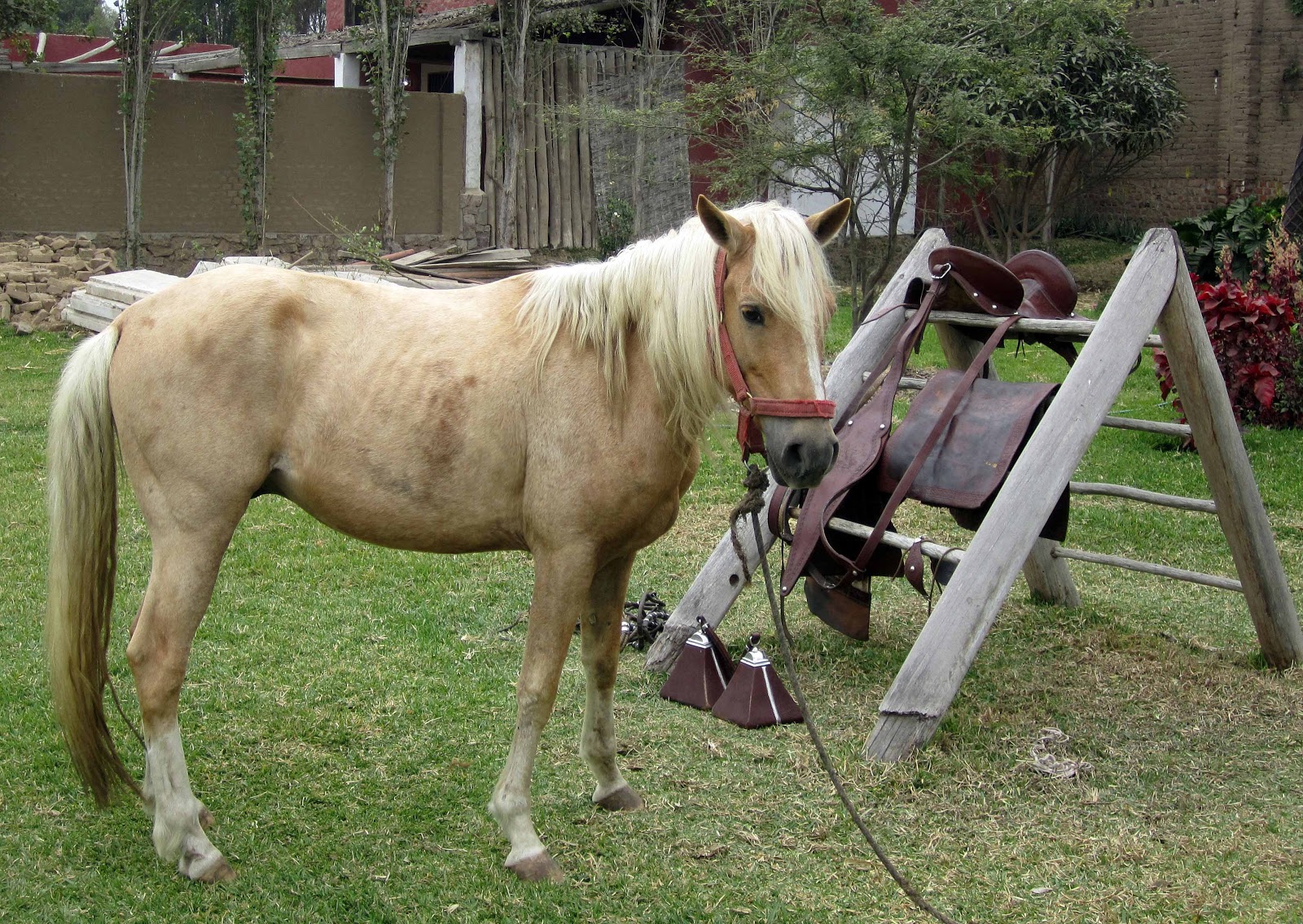
So, off we headed. Unfortunately, the whole thing was in Spanish and, as our vocabulary didn’t include anything remotely equine, it wasn’t easy to follow what exactly was going on, though one of the other tourists kindly helped out a little. It started with an explanation about the horses themselves: they are quite small in stature and their claim to fame is that they run/walk like pacers, with both legs on one side moving at the same time as opposed to right front and left back, followed by left front and right back like normal horses. This gait makes their movement look very elegant and means that the rider doesn’t bob up and down as much as on a normal horse. Horses are not native to Peru – they were originally introduced to South America by the Spanish – so I’m not sure why or how their special gait developed.


There followed an explanation of the equipment used: a blanket; a rather rigid-looking saddle; eye pieces to calm skittish horses; a piece that sits over the horse’s rump and tail, with long straps that hang at the back; two bridles – not sure why – that bit was lost in translation; and two big wooden-box-like stirrups. To be honest, it all seemed quite heavy for the poor horse to carry around as well as its rider.


The rider normally wears a poncho and a sombrero, and the other tourists who decided to mount and walk the horses around all donned the full kit for their photo shoots. Sarah and I refrained. Next, the rider presented a riding-around-to-music display, then out came two dancers in traditional costume. These were the renowned Marinera dancers, a Peruvian coastal speciality with a national contest held in Trujillo every January. The girl was wearing a beautifully embroidered blouse/shirt dress (white with many colours, including peacock designs) and an over-skirt of purple satin, which was very full for flouncing around when dancing. She had traditional earrings with Moche designs and wore her hair in two braids, decorated with flowers, She said something about the meaning of the hair – maybe one particular style design for married women, one for single, one for having a boyfriend? I think the stripes on the girl’s belt also had a meaning but, again, there was much I couldn’t understand.


The youth was more plainly dressed, in a white ruched shirt, plain trousers and wide sash-type belt. The pair danced together, and with the horse and man also prancing around. It appeared that the girl was making amorous advances towards both her partner and the rider; her gestures were certainly flirtatious. The whole performance was charming but I wish I could have understood more of the meaning behind what was happening.

After another hearty lunch back in Trujillo, we wandered the streets taking photos and then visited the local toy museum, El primero museo de jugete en Latinamerica – truth be told, probably the only toy museum in South America. It was small, but interesting, and a definite blast from the past for older visitors like me. I recognised a Singer sewing machine and a tin whistle that I had as a child. There were lots of dolls, some very old, dating from the sixteenth century, and a doll’s house furnished in the style of the 50s and 60s. There were also lots of metallic model cars and trains – I’m sure collectors on The Antiques Roadshow would give their eye teeth to get hold of those. I recognised an old Meccano set, like one my brother used to have, and enclosed in a large glass case was a huge display of toy soldiers from England and France, dating from 1920-25.


The museum also had a separate display room for ancient, indigenous children’s toys and there was a skylight in the ceiling, from which hung many types of puppets, many old and dirty and in a sorry state of repair, not helped by their exposure to sunlight. Many of the exhibits were in poor condition and deserved to be restored and conserved but, as this is a private museum with a mere 5-soles-per-person entrance fee, the chances of the collection being properly cared for are probably quite slim.


Next came the afternoon’s cake treat, followed by more wandering to burn off all those calories! Trujillo has such a delightful and photogenic inner city that it was a pleasure to just walk and click the afternoon away.

Trujillo Cathedral at night


16 September 2012

Trujillo day two: mud pyramids, a mud city and boobies by the sea

This was another great day!

After breakfast, we moved our bags to the Colonial Hotel – cheaper and more cosy, then walked the 4½ blocks to the Cruz del Sur bus station to book the overnight Saturday bus back to Lima, and then had a brisk walk back to our original hotel ready to be picked up by our tour company. We were a bigger group of tourists this time but, HUGE luck, most of the other visitors were Spanish-speaking and had their own guide and we had the lovely Henry again, just for us – happy, knowledgeable, laughing Henry!


We headed out of town to Huaca de la Luna, another pyramid of the ancient Moche culture. We went first to the site museum where we had just 30 minutes to go round the exhibits, mostly ceramics here, rather than the gold and silver of other sites, but equally as rich in their decoration, their depiction of rituals, beliefs and everyday life. There were stunning anthropomorphic designs but also images of animals and people, and the museum contained some fascinating reconstructions and explanations of the deceased and their grave deposits, the local people and their professions.


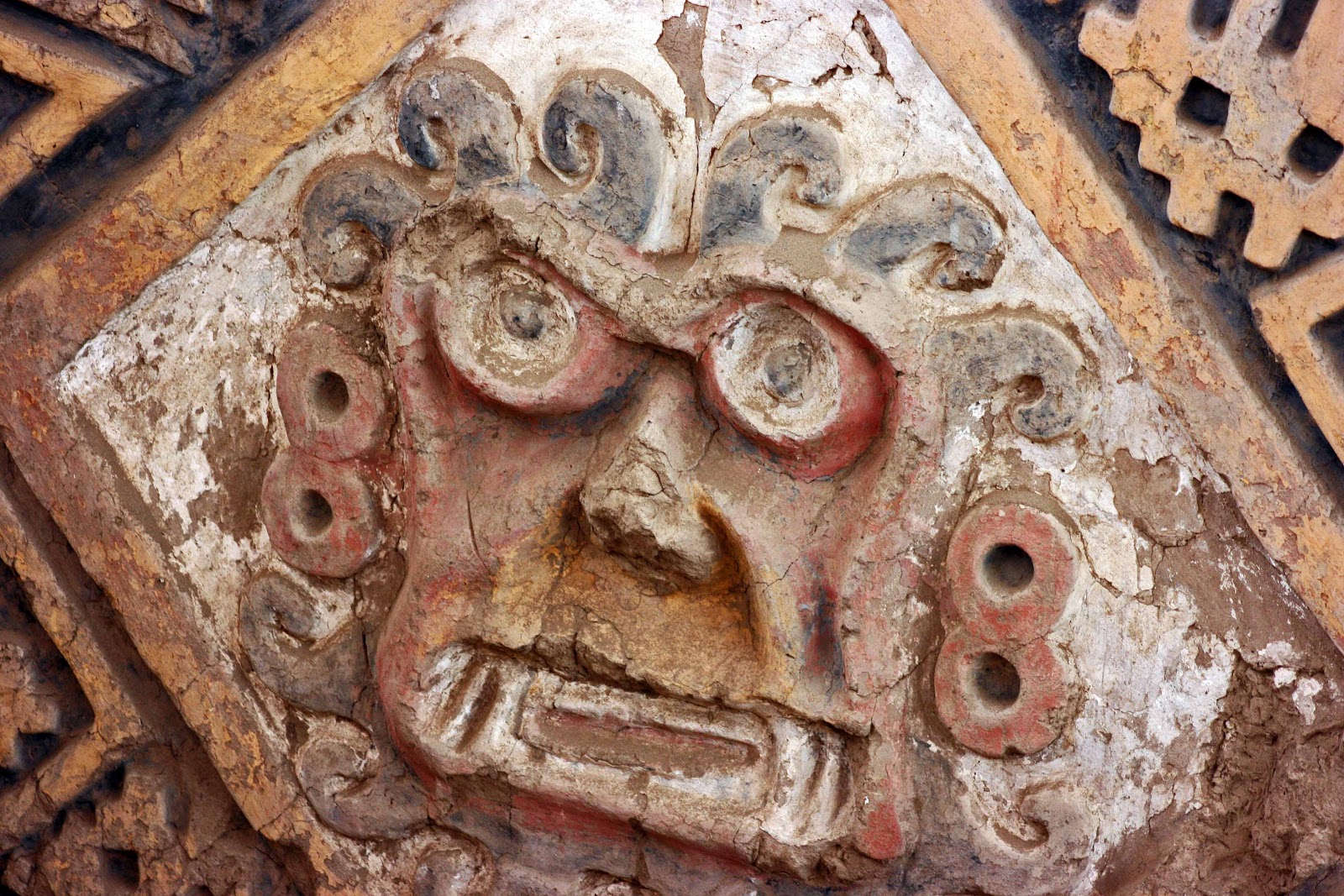
The Huaca del Sol (not able to be visited) and Huaca de la Luna pyramids were centres of power for the local Moche people, El Sol a political and administrative centre and La Luna a centre for religious ceremonies. Between the two was a city, with wide avenues and narrow alleys, grand squares, houses and palaces. Our wander around Huaca de la Luna was fascinating. The various excavations have revealed layer upon layer of temples, a tomb containing over 40 sacrificed warriors, and a huge and remarkable wall of still colourful murals.

After a delicious lunch at the surprisingly good tourist restaurant El Sombrero, we headed off to more ruins, first to Huaca Arco Iris, a relatively small pyramid in amongst the city’s suburbs. There we met Tamay the potter, a charming old gentleman, a potter and painter, who creates replicas of the amazing finds from the various archaeological sites in and around Trujillo. His pots are made at his home but he has a little workshop/shop at Huaca Arco Iris, where he paints his pots and chats to the strangers he meets from all over the world. Of course, I bought one of his beautiful pots.


Next to Chan Chan, the largest pre-Hispanic city in South America and made entirely of mud bricks. It originally covered an area of more than 20 square kilometres and may have housed as many as one hundred thousand people. It was built by the Chimu people, the civilisation that followed the Moche, and archaeologists have discovered within its walls all the essentials for city life: workshops and warehouses, plazas and pyramid temples, hearths and homesteads.


Although centuries of wind and rain, and the devastating El niño, have seriously eroded the structures, you can still get a glimpse of the enormity of the metropolis. And, though most of decoration – sculptural reliefs of geometric figures, stylised zoomorphic creatures and mythological beasts – is recreated rather than original, it is still impressive and provides an excellent vision of just how magnificent this city must have been in its heyday. As a Classics major, I am very at home amongst ruins and, at Chan Chan, I could have wandered, content, for hours.


But on we went to our last stop of the day … and it did not disappoint. Coming from land-locked Cusco, another highlight of this grand day was our short visit to the sleepy Pacific resort of Huanchaco, just 20 minutes’ drive from Trujillo. The beach ran for miles and would be perfect for long strolls, but we contented ourselves with a short walk to the end of the very Western-looking pier, where roosting boobies posed obligingly for photos. It was also interesting to watch the clash of ancient and modern in the water, keen surfers sharing the waves with the local fishermen who still use traditional reed boats for fishing.


The water glistened as the sun began to set, setting the scene for more striking photographs, the ideal end to another superb day.


14 September 2012

Trujillo day one: colour, cake and the Lady of Cao


What a fab day this was! We had to get up early for the 6.30am bus from Chiclayo to Trujillo, a 3-hour journey through rather boring landscape of sandy desert, piled with rubbish heaps much of the way, bordered on the landward side by rugged brown, mostly vegetation-less hills, and all covered by low, grey, smothering cloud, creating an atmosphere of overall gloom. I snoozed!

But everything changed when we arrived in central Trujillo. What a picturesque city it is … or, at least, the inner city, with its heritage of stunning Spanish colonial buildings. They are painted in the most striking colours: sunflower yellows, lipstick pinks, cornflower blues, barn reds and mint greens, with the elaborate door frames, ornate wrought-iron window screens and other sculptural features all picked out in a crisp clean contrasting white that makes them pop!

We were collected from the bus, had half an hour at our hotel for an uplifting cup of tea, then were met, with a huge smile and infectious laugh, by the charming Henry, our tour guide for the day. He led us off up the street for a wonderful 3-hour walking tour around the inner city. How entertaining it was, with Henry recounting story after story about the history of each place we visited.


Our first stop was the Plaza de Armas, an enormous square with a grand three-tiered sculpture at its centre. The Freedom Monument pays tribute to the heroes of Peru’s wars of independence, with sculptured figures representing trade and health, the arts and sciences, the journey from oppression to freedom, and a naked youth at the top representing liberation and the future. With a mischievous glint in his eye, Henry told us that the youth used to be quite well endowed, but his appendage offended the local nuns, who successfully campaigned to have it cut off!

Trujillo’s wedding cake of a cathedral was next. It has been much damaged and subsequently much rebuilt since its inauguration in the mid-seventeenth century, but is beautifully decorated with many fine old artworks. From there, we walked around the plaza to Urquiaga House, a colonial mansion that now houses the offices of the Central Reserve Bank of Peru, but has been charmingly restored and is lovingly maintained. I found the brightly painted walls dazzling and took so many photos. More superb examples of colonial architecture followed, as we continued our tour by walking along the pedestrian-only Avenida JirĎŚn Pizarro. We explored a community arts centre, and also poked our noses in the local rich men’s club – being women, only our noses were allowed!


When Henry departed to join his wife and young son for lunch, Sarah and I found a delightful restaurant on this avenue and enjoyed a delicious 3-course lunch for a relatively trivial sum. And this was the beginning of our gastronomic exploration of the cakes of northern Peru. For more on that and some drool-inducing photos, see my earlier blog.

We met up with Henry again at 2 o’clock for the fast car trip out of Trujillo to El Brujo, the temple and museum of the Lady of Cao. Because of the splendour of her grave goods and the inclusion of massive weapons in her tomb, found inside yet another crumbling pyramid, archaeologists have surmised that the Lady was a ruler of the Moche civilisation some 1500 years ago, the first known female ruler in all of ancient Peru. Walking around the pyramid, we saw original and reconstructed painted sculptural reliefs and graves, but the highlight of our visit lay within the nearby museum – the mummy of the Lady herself, and the splendid items that accompanied her to the afterlife.

Amazingly, the Lady’s arms, legs and feet were tattooed, with presumably sacred creatures – spiders and mythical beasts – plus various geometric designs. And, as well as the war clubs and spear throwers, her grave goods included exquisite gold earrings, nose ornaments and necklaces. No photos were allowed within the museum but I took a photo of a magazine article about the Lady, so I could show you what she looks like.


From the top of her pyramid tomb, we could see and hear the Pacific Ocean, just a hop, skip and a jump away. It was the first time I had seen the sea, except through the windows of a plane, in months and, for me, it just topped off a wholly perfect day.


27 August 2012

Terrific tortas: a finger-licking-good tour of northern Peru


Peruvians collectively have a huge sweet tooth. Kids are constantly seen sucking on lollipops or fizzy drinks, cake shops proliferate and display the most garishly coloured examples of cake decoration ever seen anywhere, and street vendors sell sweet treats like churros, a deep-fried honey-filled pastry, revoluciĂłn caliente, crunchy, spicy cookies and the rice and milk combination, arroz con leche. Dulce de leche, a sweet made by heating sweetened milk, is a big favourite here, both eaten on its own and as a filling in pastries or an icing on cakes. It is just a little addictive! And, of course, Peru grows its own cacao beans, so people have been making chocolate here for over a thousand years.

All that being said, is it any wonder that Sarah and I decided we needed to eat our way around northern Peru? Or, to put it a little more delicately, we embarked on a gastronomic torta tour, sampling the cakes of the towns and cities we visited.


Cake number one:
This was the first cake of the tour, a dessert of chocolate cake that Sarah enjoyed at the Mama Mia Restaurant in Chiclayo. For some unknown reason, I didn’t have any dessert that night – I think I had simply eaten too much Chicharron de pollo, deep-fried chicken and chips, to fit in anything else.


Cakes two and three:
These are typical examples of the vivid and gaudily decorated cakes I described above. We had gone for a wander through the huge local market in central Chiclayo and saw these cakes in a shop specialising in kids’ birthday cakes. This is the sort of cake we buy for our birthday parties at Picaflor House. They are super sweet and the kids love them.


Cakes four and five:
After a 3-hour early morning bus ride from Chiclayo to Trujillo, Sarah and I had a wonderful time walking round inner-city Trujillo with our lovely guide, Henry. But, little breakfast and all that walking made us hungry so, after our city tour and before our afternoon tour to one of the local archaeological sites, we enjoyed a sumptuous three-course lunch for the tiny sum of S/16.50 – that’s about US$6 – at Romana Restaurant. After a delicious salad entrĂ©e and a main course of chicken, I had a slice of crema volteada, a little like crème caramel, and Sarah had delicia de chocolate, a rather decadent concoction that would please even the fussiest of chocoholics!


Cake six:
I wasn’t exactly sure what this cake was made of when I ordered it – the usual procedure was to go to the cake counter and point – but it turned out to be carrot cake. And it was a very moist and quite delicious cake but I’m used to carrot cake with a cream cheese frosting and I found the dulce de leche filling and icing far too sweet – so sweet, in fact, that I left most of it. I kid you not!


Cakes seven and eight:
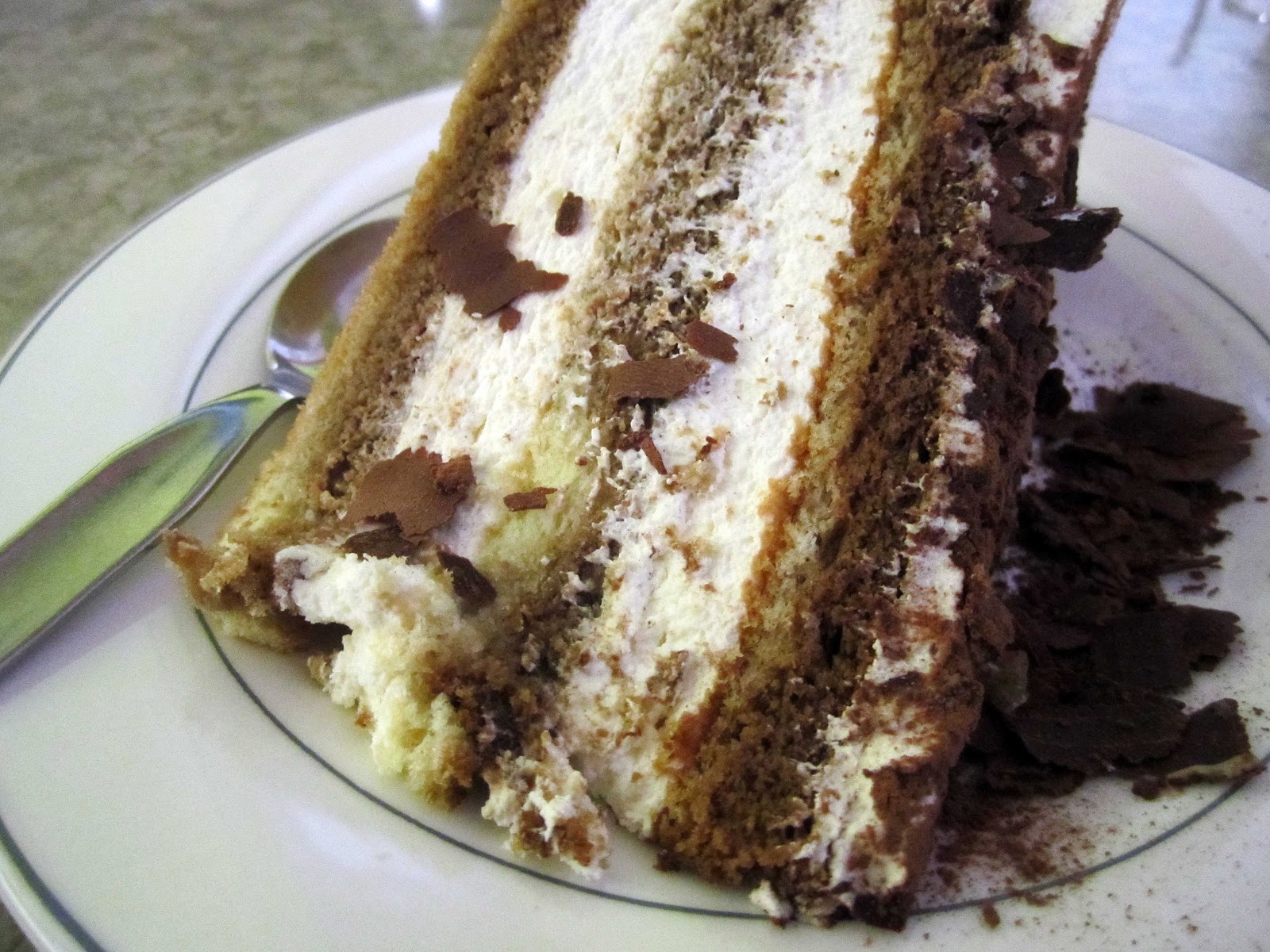
This was a relatively lazy day for us – every other day we had tours booked, starting early, but this day we slept in and, only later, booked ourselves tickets to a performance of the local horses and dancers (more on that in a future blog). Back in town later, we checked out the exhibits in the local toy museum, then decided it must be time for cake! This time I chose a divine tiramisu, an international classic, and Sarah had delicia de almendra, or almond delight. I’m reliably told it was indeed delightful!


Cake nine:
I don’t know why I don’t have a photo of cake ten – Sarah must’ve gulped it down before I had time to shoot it! We were at Arturio’s, another of Trujillo’s rather excellent culinary establishments, where I indulged in what was called a fruit soufflĂ©, though it was actually layers of sponge cake and cream with bits of succulent fruit thrown in to the mix. It was light and finger-licking good.

And so ends this little tour of the tortas of northern Peru. Astoundingly, I didn’t put on any weight on our tour, probably because we did a ton of walking, but I wouldn’t recommend trying a tour like this without plenty of exercise. I do, however, recommend sampling the sweet delights of Peru.

22 August 2012

The Bog Blog


A toilet tour of northern Peru ...


Bog number one:
At El Museo de la Nacion in Lima, the biggest chamber I’ve ever seen anywhere in the world – big enough to hold a small party and appropriate enough for the cavernous building in which it was located. I had tried several other toilets but all were locked or out of service, so I asked the security woman where I could find a toilet and she directed me to this ballroom of bathrooms.


Bog number two:
At the Embajador Hotel in Chiclayo. The toilet with a view – or, more accurately, the toilet where you can be viewed! It’s a high-ceilinged room, with perhaps a 20-foot stud – with windows at the top along one wall, which fronts on to a corridor and a small inner courtyard. The windows are permanently open and so high up that they’re impossible for anyone without a tall ladder to close – not something your average tourist carries in their luggage. Presumably they’re open to allow steam and assorted bathroom-specific smells to escape but this also means that anyone feeling even vaguely perverted in the two rooms overlooking the courtyard can also overlook you at your ablutions – not the most comfortable way to complete the daily necessities of life.


Bog number three:
At Huaca de la Luna, near Trujillo. Is this setting beautiful or what?
Huaca de la Luna, and the nearby Huaca del Sol, are archaeological sites of the Moche, or Mochica, civilisation, dating from about 100 to 800 AD, and they are impressive. Huaca de la Luna is an adobe-brick pyramid-shaped structure that appears to have served a religious and ceremonial religious function. It has beautifully coloured sculptural friezes, including one huge wall panel that is seven registers and perhaps 60 feet tall.

I didn’t actually get to use this toilet, as Sarah and I had enjoyed a very thorough tour of the site with our lovely English-speaking guide Henry, so were holding up the Spanish-speaking group and had to rush back to our tour van. The mountain in the background of this image is called Cerro Blanco, or White Mountain.


Bog number four:
At the toy museum, in Trujillo. The toilet was carefully camouflaged with a wallpapered door to match the surrounding wall, the entrance thereby not distracting from the exhibits which surrounded it: to the left, shelves housing dolls, a wooden mototaxi, and an old half-deflated ball; to the right, a pair of colourful, traditionally dressed Peruvian dolls; and, in the foreground, a cabinet displaying a large collection of toy soldiers from France and England dating from 1920 to 1925.

Bog number five:
At the Colonial Hotel in Trujillo, from the first floor balcony where our room was located. There was nothing particularly remarkable about the toilet itself, but it was a nice hotel, with plain but comfortable rooms, and plenty of indoor and outdoor seating areas. It’s only a block and a half from the city plaza, with a nice cafĂ© next door for breakfast and other meals, and a tour company on the other side, which had friendly staff and reasonably priced and well run tours. Oh, and the toilet was clean too!


Bog number six:
At the Cruz del Sur bus station in Lima. For some unknown and obviously bizarre reason, the cisterns of the toilets were protected by metal grids, padlocked in place. I couldn’t help but speculate as to why: Peru is plagued by toilet thieves? passengers of Cruz del Sur buses have a penchant for fiddling with the inner workings of the cisterns – a fetish with ballcocks perhaps?

This photo was a little tricky to capture. The gloom of the room meant I needed to use the flash and I couldn’t help but wonder what the service staff thought of a bright flash of light suddenly illuminating the end cubicle: had some alien being beamed down from a galaxy far far away? was the kinky gringa taking a photo of some forbidden fruit to instil longing in a distant lover? I avoided making eye contact with the woman on exiting the cubicle and washed my hands with alacrity in order to avoid any difficult questions.